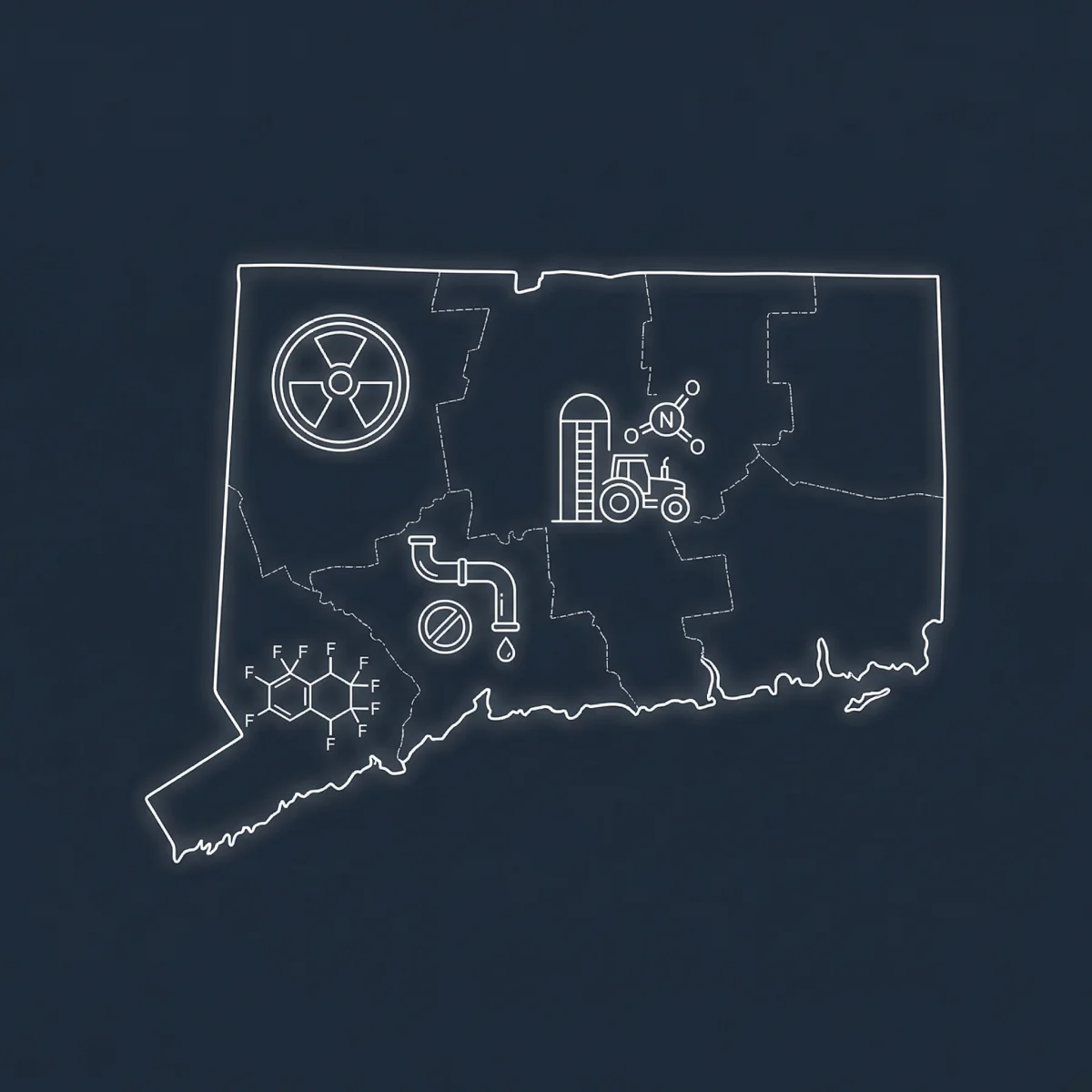
Connecticut is a small state with a complicated water quality picture. The risks in a 1920s triple-decker in Waterbury's East End are completely different from the risks in a 1960s ranch house in Newtown on a private well, which are completely different from the risks in a new construction home in Glastonbury connected to the MDC system.
Understanding what to worry about — and what not to worry about — requires knowing your water source, your housing age, and your geography. Here's a practical breakdown.
Waterbury and the Naugatuck Valley
Water source: Municipal (surface water — Hop Brook watershed, Mad River system) Hardness: Soft, approximately 53 ppm Primary concern: Lead service lines, particularly in the East End. Waterbury's soft water is more corrosive to lead pipes than hard water. Secondary concern: Disinfection byproducts from chlorination of surface water with organic matter. What to test for: Lead (especially if your home was built before 1986), disinfection byproducts. What to do: NSF/ANSI 53 certified filter at the kitchen tap for lead. Carbon filter for DBPs.
The Naugatuck Valley towns — Ansonia, Derby, Shelton, Seymour — share similar surface water sources and similar lead pipe risks in older housing stock. Waterbury's soft water is particularly corrosive to lead pipes, making the risk here higher than in many other Connecticut towns. The structural pattern across the state — no mandatory ongoing testing, no insurance coverage, no clear responsible agency — mirrors Connecticut's crumbling foundation crisis.
Ready to check your own water? Enter your ZIP code at CheckYourTap.com to see what's in your tap water — free, in 30 seconds.
Fairfield County
Water source: Mix of municipal (Aquarion, primarily groundwater-dependent) and private wells in outlying areas. Hardness: Hard to very hard — Newtown 171 ppm, Bridgeport 168 ppm, most of the county above 120 ppm. Primary concern: PFAS in Aquarion's groundwater supply. Compliance deadline 2031. Secondary concern: Lead service lines in older housing stock (Greenwich has 1,500+ suspected lines). Hard water damage to appliances and plumbing. What to test for: PFAS (especially if on Aquarion), lead (pre-1986 homes), hardness. What to do: Reverse osmosis for PFAS. NSF/ANSI 53 filter for lead. Water softener for hardness.
Private well owners in Fairfield County should also test for PFAS — the contamination from industrial and military sources in the county affects groundwater, not just Aquarion's supply. And even Greenwich's wealthiest neighborhoods aren't immune to lead pipe infrastructure.
Hartford Area (MDC Service Area)
Water source: Municipal (MDC — Metropolitan District Commission, surface water from Barkhamsted and Nepaug reservoirs). Hardness: Soft, approximately 15 ppm. Primary concern: Lead service lines in Hartford, West Hartford, Bloomfield, and other older MDC service area towns. Secondary concern: Disinfection byproducts. The EPA regulates THMs at 80 ppb and HAAs at 60 ppb. What to test for: Lead (pre-1986 homes, especially in Hartford), DBPs. What to do: NSF/ANSI 53 filter for lead. Carbon filter for DBPs.
New Haven Area (SCCRWA Service Area)
Water source: Municipal (South Central Connecticut Regional Water Authority, surface water from Lake Whitney and Lake Gaillard). Primary concern: Lead service lines in New Haven's older neighborhoods. What to test for: Lead, DBPs.
Litchfield County
Water source: Primarily private wells (groundwater from granite and limestone bedrock). Primary concern: Radon in water (granite bedrock, elevated throughout the county). PFAS from industrial sources (Kimberly-Clark in New Milford, other industrial sites). Secondary concern: Uranium in granite bedrock areas. Hard water in limestone areas. What to test for: Radon, PFAS, uranium (granite areas), hardness, bacteria. What to do: Radon aeration system. Reverse osmosis for PFAS and uranium. Water softener for hardness.
What Should Eastern CT Well Owners Test For?
Water source: Primarily private wells (groundwater from granite bedrock). Primary concern: Nitrates from agricultural runoff (Connecticut River Valley, tobacco farming areas). Radon and uranium from granite bedrock. Secondary concern: EDB legacy contamination in some areas. Bacteria from septic proximity and agricultural runoff. What to test for: Nitrates, radon, uranium, bacteria, PFAS (near any industrial or military sites). The USGS has documented how granite bedrock in this region naturally concentrates uranium and radon in groundwater.
Groton and New London Area
Water source: Mix of municipal and private wells. Primary concern: PFAS from Naval Submarine Base New London (EPA Superfund site). Private wells near the base should be tested. What to test for: PFAS (especially private wells near the base), lead (older housing stock).
Keep Reading
- The Water Test Your Bank Required Doesn't Test for What's Actually Dangerous
- Your Water Quality Report Arrived. Here's How to Actually Read It.
- Reverse Osmosis Removes Almost Everything. Here's What Connecticut Homeowners Need to Know Before Buying One.
Frequently Asked Questions
What is the hardest water in Connecticut?
Fairfield County has the hardest water in Connecticut, with Newtown measuring approximately 171 ppm and Bridgeport at 168 ppm. Most of the county exceeds 120 ppm, which is classified as "hard" water. By contrast, the Hartford area (MDC system) has very soft water at approximately 15 ppm, and Waterbury measures around 53 ppm. Hard water damages appliances and plumbing but is not a health risk — it's a household maintenance and cost issue.
Is Hartford tap water safe to drink?
Hartford's MDC water comes from protected surface reservoirs (Barkhamsted and Nepaug) and is generally high quality. The primary concern is lead service lines in older Hartford neighborhoods — the soft water (15 ppm) is more corrosive to lead pipes. Homes built before 1986 should use an NSF/ANSI 53 certified filter at the kitchen tap. Disinfection byproducts from chlorination are a secondary concern addressable with a carbon filter.
Should I test my well water if I live in eastern Connecticut?
Yes. Eastern Connecticut wells face multiple risks from the region's granite bedrock and agricultural history: elevated uranium and radon from granite, nitrates from Connecticut River Valley farming, and bacteria from septic system proximity. A comprehensive test ($200–$500) covering nitrates, radon, uranium, bacteria, and PFAS is recommended for all well owners in the region.
Sources: CT DPH Water Quality Data; waterhardness.org CT data; CT Mirror Lead Service Line Investigation, July 2025; Hartford Business Journal PFAS Coverage, March 2026; CT Attorney General PFAS Lawsuit, January 2024; NAVFAC Groton PFAS Documentation.