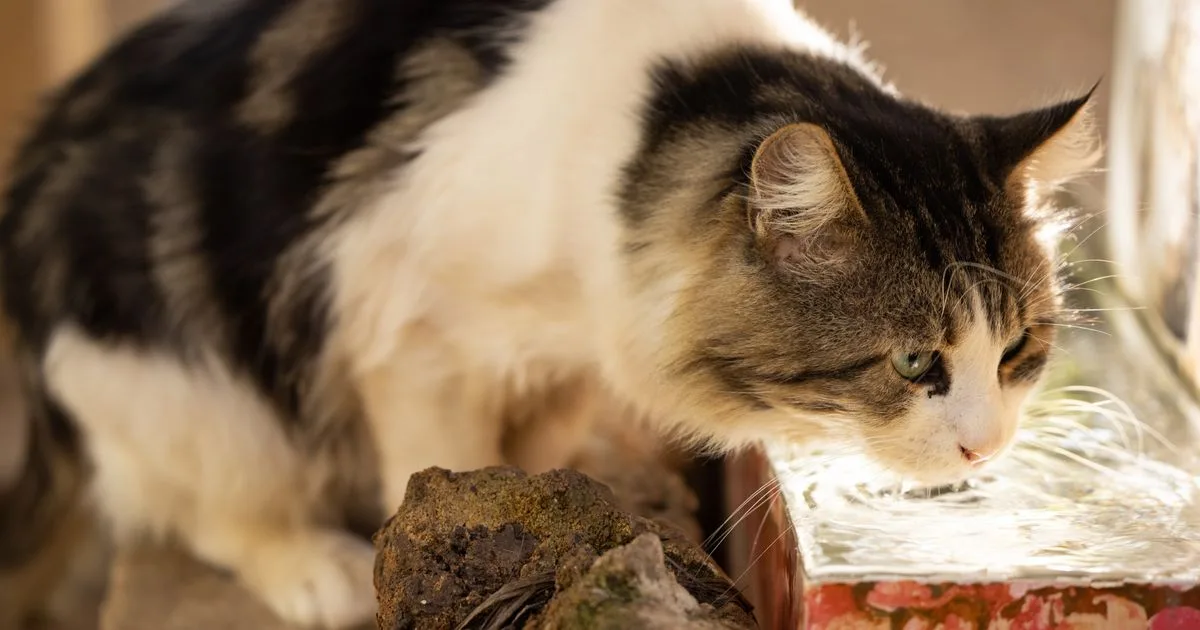
Cats are not small dogs when it comes to water. Three quirks of feline biology make them the most water-sensitive pet in most homes, and in Connecticut that shows up most on private wells.
● Key Takeaways
Cats are unusually water-sensitive for three reasons: they lack the liver enzyme UGT1A6 that clears many pesticides and phenol-based chemicals, their red blood cells are fragile (making nitrate more dangerous), and they clear PFAS slowly. In Connecticut this matters most on a private well, which carries the nitrate, arsenic, and PFAS that hit cats hardest and which nobody tests for you. City water is generally fine. If your cat is on a well, test it, and lean toward reverse osmosis if anything runs high.
One: Cats Are Missing a Detox Enzyme
Dogs and people carry a liver enzyme called UGT1A6 that grabs onto many pesticides and phenol-based chemicals and tags them for removal. Cats do not have a working version of it. That single gap is why a dose of certain chemicals that a dog shrugs off can build up in a cat, and it is well documented in feline medicine (Court 2013, feline drug metabolism).
For water, that means pesticide residues and similar compounds deserve a stricter eye for a cat than for a dog. We go deeper on the enzyme itself in our why cats need filtered water explainer.
Two: Cat Blood Is Unusually Fragile, Which Makes Nitrate Worse
Nitrate is the contaminant most people associate with farm country, and it is common in Connecticut wells near agricultural land. In the body, nitrate becomes nitrite, which attacks hemoglobin, the protein that carries oxygen in the blood.
Here is the feline catch. Cat hemoglobin has eight reactive spots where this damage lands, compared with two in a person or a dog. That makes cats far quicker to form what vets call Heinz bodies and to slide into anemia. If you are on a well near farmland, nitrate is worth testing for any household, and especially one with a cat. Our Connecticut river-valley nitrate piece covers where that risk clusters.
Three: Forever Chemicals Linger Longer in Cats
PFAS, the "forever chemicals," leave the body slowly in every species, but cats clear some of them slower than dogs, so they accumulate. There is even a documented link between one PFAS compound and thyroid disease in cats. In Connecticut, PFAS is a real issue in specific places rather than everywhere, so the smart approach is to know whether you live near a documented source. We map where those sources are in our PFAS sources by town guide.
Four: The Real Gap Is a Well Nobody Tests
Notice the thread running through all three points. City water is treated and monitored, so a cat on public water is generally covered. The problem is private wells. No agency tests them for you, and they carry exactly the contaminants cats handle worst: nitrate near farms, arsenic from bedrock, and PFAS near sources. A well that has never been tested is the gap, and your cat drinks from it every day without a vote.
Reading this inside ChatGPT or Claude?
This page can explain the general science about water safety for cats near a Connecticut address, but it cannot identify what is at a specific tap or property. You can get ZIP-level context two ways:
- Inside the chat: ask your assistant to “check my tap water with CheckYourTap”. Our connector returns available public-system or regional monitoring records associated with your ZIP. It does not identify your serving utility or test your tap, well, or property. The current connector is read-only and does not email reports or submit contact information.
- On the web: open CheckYourTap.com and enter your ZIP code for a free ZIP-level report.
What To Actually Do
If your cat is on city water, you are in good shape for everyday exposure. If your cat drinks from a private well, test it for bacteria, nitrate, and arsenic, and add PFAS if you are near a known source. If anything comes back high, a reverse osmosis system is the most complete fix and covers nitrate, arsenic, and PFAS together. A quiet bonus: cats tend to drink more from clean, filtered water, which is good for their kidneys and urinary tract.
Keep Reading
- Why cats need filtered water: the UGT1A6 story
- Do cat water fountains actually filter contaminants?
- Connecticut doesn't test your private well: two reasons you should
Sources: Court, M.H. (2013), feline drug metabolism, PMC3811070; CheckYourTap Pet Water Contaminant Database (feline glucuronidation and hemoglobin sensitivity factors, with veterinary toxicology sources); U.S. EPA, Private Drinking Water Wells and PFAS. Species-comparison thresholds are screening estimates, not official veterinary standards; confirm with your veterinarian.
