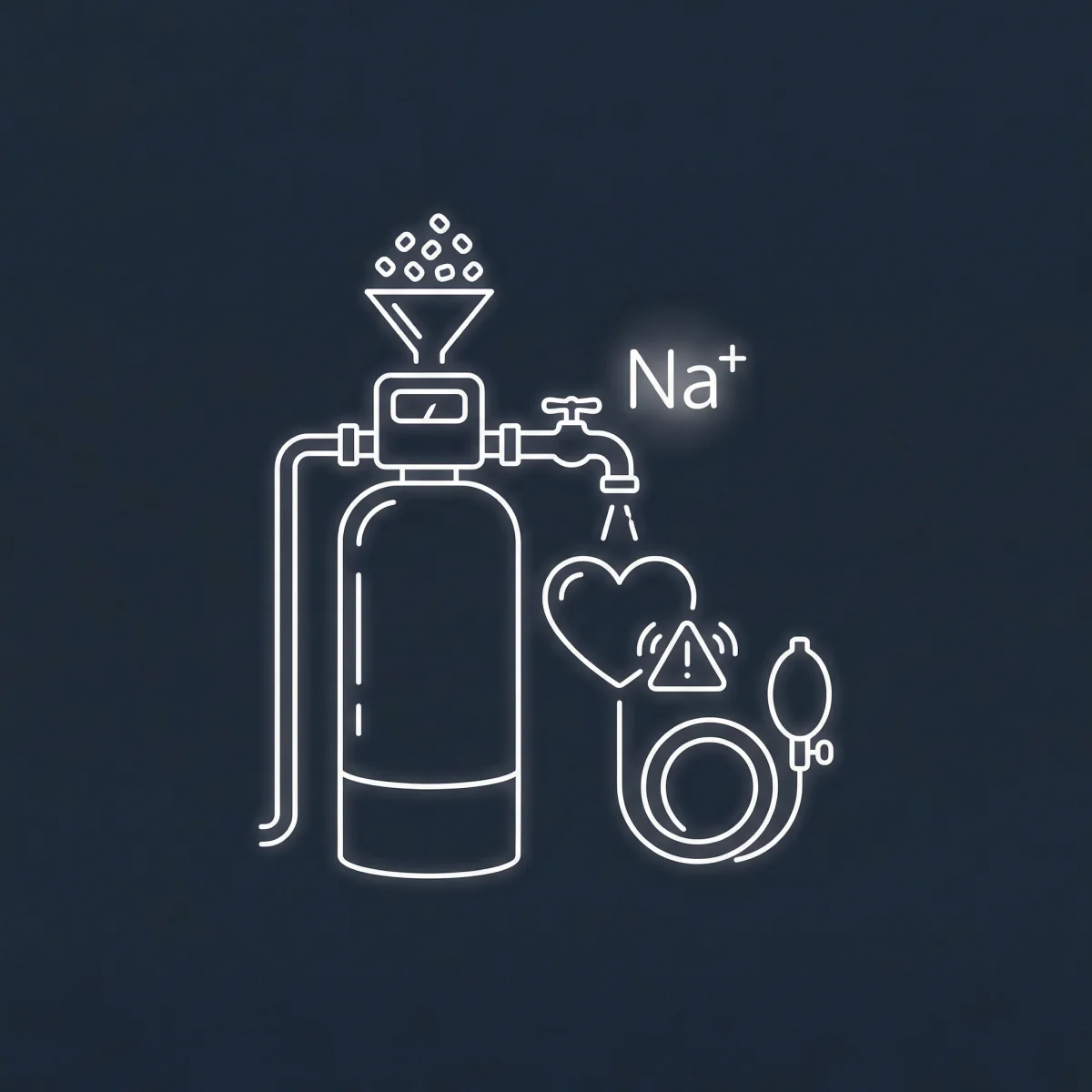
The question comes up whenever someone is considering a water softener: doesn't it add salt to the water? Isn't that bad for you?
The concern is legitimate. The answer is more nuanced than the water softener industry typically acknowledges and less alarming than the concern implies.
How Do Water Softeners Add Sodium to Your Water?
A standard water softener uses ion exchange: water passes through a resin bed containing sodium ions. The calcium and magnesium ions in hard water — the ones that cause scale — have a stronger attraction to the resin than sodium does. They swap places: calcium and magnesium bind to the resin, and sodium is released into the water.
The result is water with less calcium and magnesium and more sodium. The amount of sodium added depends on the hardness of the incoming water — harder water requires more ion exchange, which releases more sodium. If you're not sure how hard your water is, our breakdown of hard water damage costs across Connecticut includes a hardness map by town.
The Numbers for Connecticut
In Newtown, where water hardness runs at 171 ppm (approximately 10 grains per gallon), a water softener adds approximately 117 milligrams of sodium per liter of softened water.
For comparison:
- A slice of white bread: approximately 150 mg sodium
- An 8-ounce glass of milk: approximately 100 mg sodium
- A cup of canned soup: approximately 800–1,000 mg sodium
The sodium added by a water softener, in the context of a typical American diet that contains 3,000–4,000 mg of sodium per day, is not a meaningful contribution for most people.
When It Does Matter
The exception is people on medically supervised sodium-restricted diets — typically those with hypertension, heart failure, or kidney disease who have been told to limit sodium to 1,500 mg per day or less. For these individuals, the 117 mg per liter from softened water is a more meaningful fraction of their daily allowance, and it's worth discussing with their doctor.
The CT DPH recommends that people on sodium-restricted diets use a bypass line on their water softener for drinking water, or install a reverse osmosis system at the kitchen tap (RO removes sodium along with other dissolved solids).
The Potassium Alternative
Many water softeners can use potassium chloride instead of sodium chloride as the regenerant. The ion exchange process is the same, but potassium is released into the water instead of sodium.
Potassium is not just a neutral alternative to sodium — it's actually beneficial for blood pressure. The DASH diet, which the American Heart Association recommends for managing hypertension, emphasizes increasing potassium intake. Potassium chloride softener salt is more expensive than sodium chloride (roughly 3–4 times the cost), but for households with blood pressure concerns, the health tradeoff is worth considering.
Is hard water costing you money? Enter your ZIP code at CheckYourTap.com to see what's in your tap water — free, in 30 seconds.
Keep Reading
- Hard Water Is Destroying Your Water Heater. Here's What It's Actually Costing You.
- Hard Water Is Adding $500 a Year to Your Energy Bill. Most Connecticut Homeowners Have No Idea.
- Reverse Osmosis Removes Almost Everything. Here's What Connecticut Homeowners Need to Know Before Buying One.
Frequently Asked Questions
How much sodium does a water softener add to drinking water?
At Newtown's hardness of 171 ppm, a water softener adds approximately 117 milligrams of sodium per liter. For comparison, a slice of bread has about 150 mg and a cup of canned soup has 800–1,000 mg. In the context of a typical 3,000–4,000 mg daily sodium intake, the softener's contribution is not meaningful for most people. People on medically supervised sodium-restricted diets (1,500 mg/day or less) should discuss this with their doctor.
Is potassium chloride better than sodium chloride for water softeners?
Potassium chloride works identically to sodium chloride in a water softener — same ion exchange process, same scale prevention — but releases potassium into the water instead of sodium. Potassium is actually beneficial for blood pressure (emphasized in the DASH diet). The tradeoff is cost: potassium chloride salt costs roughly 3–4 times more than sodium chloride. For households with blood pressure concerns, the health benefit may justify the premium.
Can you drink softened water if you have high blood pressure?
For most people with hypertension, the sodium added by a water softener (about 117 mg/L at Connecticut hardness levels) is a small fraction of daily intake and unlikely to be clinically significant. However, people on strict sodium-restricted diets should either install a bypass line for drinking water or add a reverse osmosis system at the kitchen tap, which removes sodium along with other dissolved solids. Consult your doctor for personalized guidance.
Sources: CT DPH Water Softener Guidance; American Heart Association Sodium Recommendations; DASH Diet Research; Valiant Energy Water Softener Service Information; CT DEEP Wastewater Regulations.