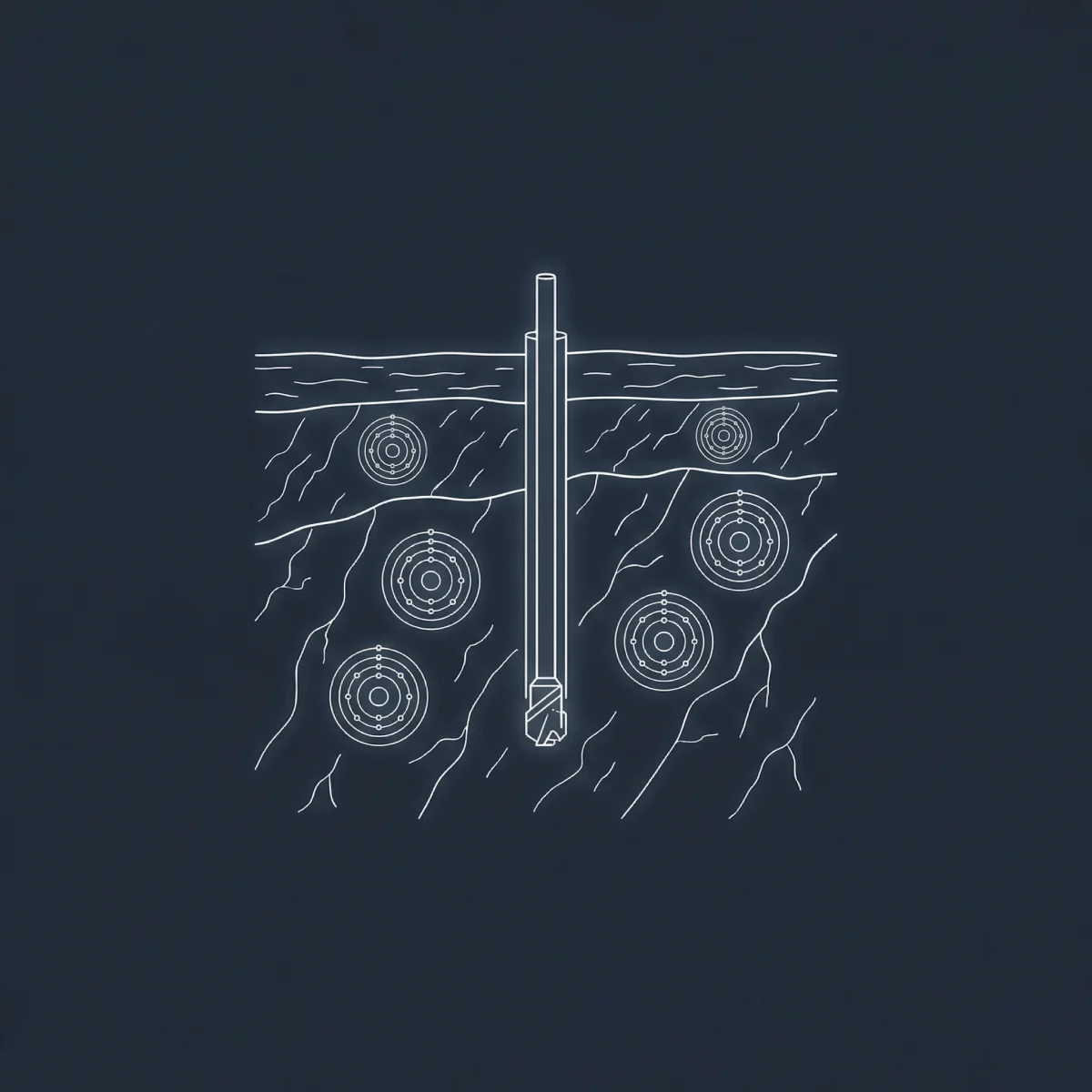
When people hear "uranium in the water," the first association is nuclear — power plants, weapons, contamination from industrial sources. In eastern Connecticut, the uranium in some private wells has nothing to do with any of that. It's geology.
Connecticut sits on some of the oldest rock in North America. The eastern part of the state — the hills and valleys of Tolland and Windham counties, the granite uplands of New London County — is underlain by ancient crystalline bedrock that contains naturally occurring uranium, thorium, and radium. These elements are present in trace amounts in the rock, and as groundwater moves through fractures in the granite, it dissolves small quantities of them.
The result is that some private wells in eastern Connecticut contain uranium at levels that exceed the EPA's maximum contaminant level of 30 micrograms per liter. Not all wells. Not even most wells. But enough that uranium testing should be standard practice for anyone on a private well in the affected geology.
What Does Uranium in Drinking Water Do to Your Body?
The health concern with uranium in drinking water is not radiation — it's chemistry. At the concentrations found in drinking water, uranium is primarily a nephrotoxin: it damages the kidneys. The EPA's 30 microgram per liter limit was set based on kidney toxicity, not radiation risk.
Long-term consumption of water with uranium above the EPA limit is associated with decreased kidney function, increased risk of kidney disease, and in some studies, increased risk of bone cancer (uranium accumulates in bone). The effects are dose-dependent and cumulative — they develop over years of exposure, not from a single glass of water.
This is important context for understanding why the standard mortgage water test doesn't include uranium. The acute effects of uranium exposure are not dramatic. You don't get sick immediately. The damage accumulates slowly, over years, in ways that are difficult to attribute to a specific cause.
The Radon Connection
Uranium in bedrock doesn't just produce uranium in water. As uranium decays, it produces radium, which decays into radon. The same granite geology that produces uranium in some eastern CT wells also produces elevated radon — both in soil gas (which enters homes through foundations) and in groundwater.
This means that well owners in eastern Connecticut who find elevated uranium in their water should also test for radon — both in air and in water. The two problems often co-occur because they share the same geological source. In Litchfield County, where the granite geology is similar, radon in shower water is a significant and underrecognized risk.
Valiant Energy offers radon remediation services — this is not an incidental service for a Connecticut company. Radon is a genuine and significant risk in CT's granite bedrock areas, and it's one that most homeowners don't think about until they're already dealing with it.
How Do You Test for and Remove Uranium from Well Water?
If you're on a private well in Tolland County, Windham County, or the upland areas of New London County, add uranium to your next water test. A uranium test costs $30–$50 as an add-on to a standard water panel. If the result is above 30 micrograms per liter, the treatment options are well-established: reverse osmosis removes uranium effectively, as does ion exchange.
The CT Department of Public Health's Private Well Testing program recommends testing for uranium in areas with granite bedrock geology. Most homeowners in these areas have never done it. If you're relying on the water test from when you bought the house, it almost certainly didn't include uranium.
Concerned about uranium in your well water? Enter your ZIP code at CheckYourTap.com to see what's in your tap water — free, in 30 seconds.
Keep Reading
- Your Well Water Arsenic Test Came Back 'Safe.' Here's Why That Might Not Mean What You Think.
- Your Shower Is the Most Dangerous Room in Your House If You Have a Well in Litchfield County
- The Water Test Your Bank Required Doesn't Test for What's Actually Dangerous
Frequently Asked Questions
Is there uranium in Connecticut well water?
Some private wells in eastern Connecticut contain naturally occurring uranium at levels exceeding the EPA's maximum contaminant level of 30 micrograms per liter. The source is ancient crystalline bedrock (granite and gneiss) in Tolland, Windham, and parts of New London counties. Not all wells are affected — it depends on local geology — but uranium testing should be standard practice for anyone on a private well in the granite bedrock areas. A uranium test costs $30–$50 as an add-on to a standard water panel.
Is uranium in water dangerous?
At concentrations found in drinking water, uranium is primarily a nephrotoxin — it damages the kidneys. Long-term consumption above the EPA's 30 mcg/L limit is associated with decreased kidney function, increased kidney disease risk, and in some studies, increased bone cancer risk (uranium accumulates in bone). The effects are dose-dependent and cumulative over years, not from a single glass. The standard mortgage water test does not include uranium.
How do you remove uranium from well water?
Reverse osmosis and ion exchange are both effective at removing uranium from drinking water. An under-sink reverse osmosis system ($300–$800) at the kitchen tap is the most common solution for point-of-use treatment. If uranium is found, also test for radon — both come from the same granite bedrock geology, and the two problems often co-occur. Radon requires a separate aeration system.
Sources: CT DPH Private Well Testing Recommendations; EPA Uranium in Drinking Water; USGS Connecticut Bedrock Geology; CT DEEP Radon Information; EPA Maximum Contaminant Levels.