If you've been reading about water quality in Connecticut — PFAS in Fairfield County, lead in Waterbury and Bridgeport, nitrates in the River Valley, arsenic and uranium in eastern CT — you've probably encountered reverse osmosis as the solution. It comes up in almost every discussion of serious water contamination, and for good reason: it works.
But "it works" covers a lot of ground, and the details matter before you spend $300–$800 on a system.
What Does Reverse Osmosis Actually Remove from Water?
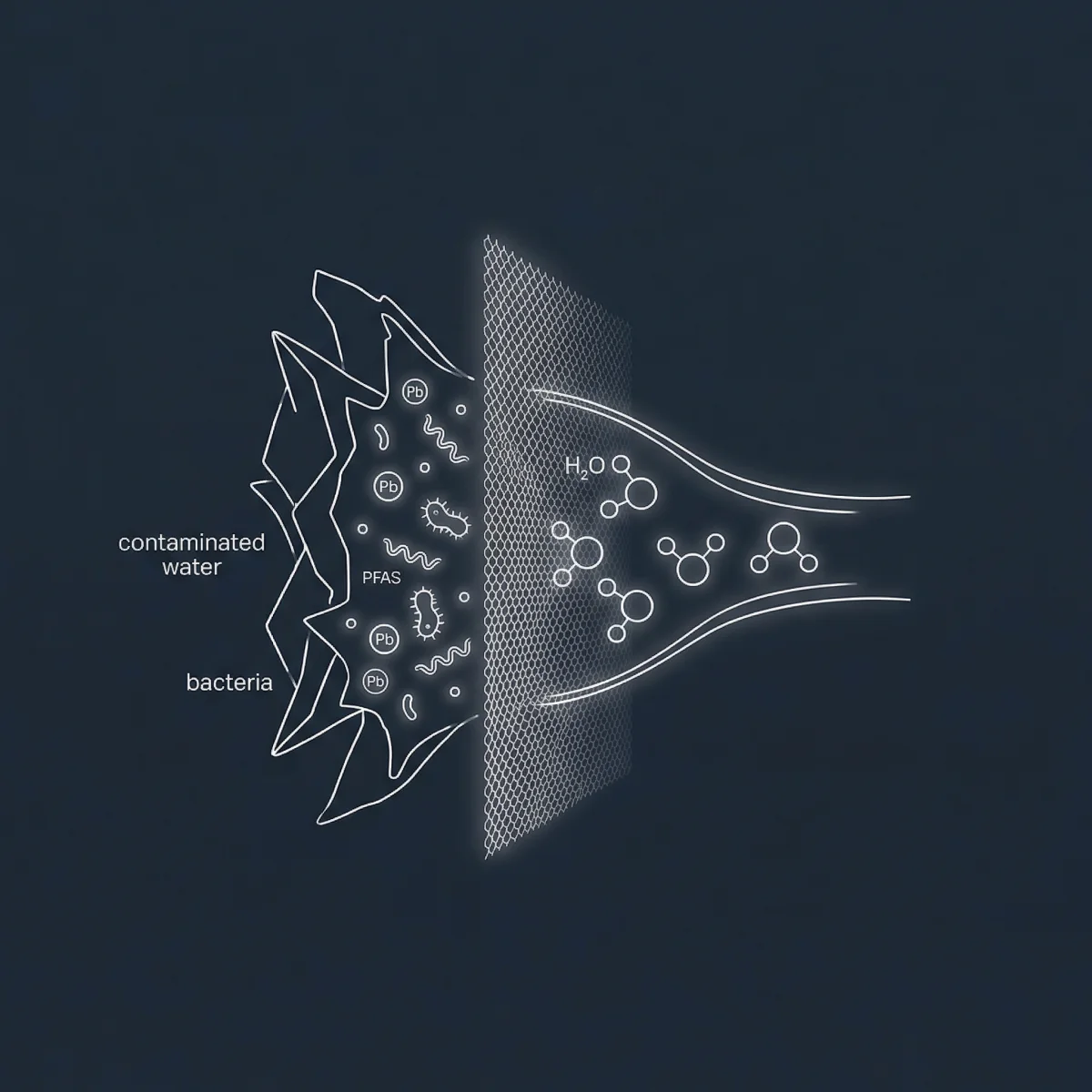
Reverse osmosis forces water through a semi-permeable membrane under pressure. Systems certified to NSF/ANSI Standard 58 have been independently tested to verify performance. The membrane has pores small enough to block dissolved solids — ions, molecules, and particles — while allowing water molecules to pass through. The result is water with dramatically reduced dissolved contaminant levels.
What RO removes effectively (to 95%+ reduction):
- PFAS (all major compounds)
- Lead
- Arsenic
- Nitrates
- Uranium
- Chromium-6
- Fluoride
- Most dissolved heavy metals
- Dissolved salts (including sodium from water softeners)
What RO does not remove effectively:
- Chlorine and chloramine (these are removed by the carbon pre-filter stage, not the membrane itself)
- Some volatile organic compounds (VOCs) — these require a carbon stage
- Dissolved gases like radon (radon requires aeration, not filtration)
The Water Waste Issue
RO systems produce a "reject stream" — water that carries the concentrated contaminants away from the membrane and down the drain. For every gallon of treated water produced, a typical residential RO system sends 3–4 gallons down the drain.
For a Connecticut household that uses 50 gallons of drinking and cooking water per day, that's 150–200 gallons of water wasted daily. At Connecticut water rates, the waste adds roughly $15–$25 per month to your water bill.
Higher-efficiency RO systems (sometimes called "permeate pump" systems) can reduce the waste ratio to 1:1 or better. They cost more upfront but pay back in reduced water waste.
The Maintenance Reality
An RO system requires regular maintenance:
- Pre-filter replacement: every 6–12 months
- RO membrane replacement: every 2–3 years
- Post-filter replacement: every 12 months
- UV bulb replacement (if included): annually
Neglecting maintenance reduces the system's effectiveness. A membrane that hasn't been replaced in five years may not be removing PFAS to the levels it did when new. If you install an RO system, build the maintenance schedule into your calendar.
Which Connecticut Homeowners Need Reverse Osmosis?
For Fairfield County homeowners on Aquarion's system with PFAS concerns: an under-sink RO system at the kitchen tap is the most effective immediate action you can take.
For Waterbury and Bridgeport homeowners with lead concerns: an NSF/ANSI 53 certified carbon filter is sufficient for lead reduction and is less expensive than RO. RO is not necessary for lead alone.
For eastern CT well owners with nitrate or arsenic concerns: RO is the most effective treatment for both.
For Litchfield County well owners with radon concerns: RO does not remove radon. The EPA recommends aeration systems for radon in water.
The right filter depends on what's in your water. The only way to know what's in your water is to test it. If you're not sure where to start, our guide on how to read your water quality report walks you through what the numbers mean.
Ready to check your own water? Enter your ZIP code at CheckYourTap.com to see what's in your tap water — free, in 30 seconds.
Keep Reading
- Boiling Your Water Removes Some Things and Concentrates Others. Know the Difference Before You Boil.
- The Chemical Your Water Utility Uses to Keep You Safe Is Creating New Problems in the Process
- Your Water Quality Report Arrived. Here's How to Actually Read It.
- The Water Test Your Bank Required Doesn't Test for What's Actually Dangerous
Frequently Asked Questions
Does reverse osmosis remove PFAS from water?
Yes. Reverse osmosis removes 95%+ of all major PFAS compounds, making it the most effective home treatment technology for PFAS. An under-sink RO system costs $300–$800 and is the recommended solution for Fairfield County residents on Aquarion's water system, where PFAS has been documented in the groundwater supply. The membrane physically blocks PFAS molecules from passing through.
How much water does a reverse osmosis system waste?
A typical residential RO system sends 3–4 gallons down the drain for every gallon of treated water produced. For a Connecticut household using 50 gallons of drinking and cooking water daily, that's 150–200 gallons wasted, adding roughly $15–$25/month to the water bill. Higher-efficiency "permeate pump" systems reduce waste to a 1:1 ratio but cost more upfront.
Does reverse osmosis remove radon from water?
No. Reverse osmosis does not effectively remove dissolved gases like radon. If you have radon in your well water — common in Litchfield County and eastern Connecticut's granite bedrock areas — you need an aeration system, which bubbles the radon out of the water before it enters the house. RO and aeration serve different purposes: RO for dissolved contaminants (PFAS, lead, arsenic, nitrates), aeration for dissolved gases (radon).
Sources: NSF International RO Certification Standards; EPA Drinking Water Treatment Technologies; WQA (Water Quality Association) RO Performance Data; CT DPH Water Treatment Guidance.