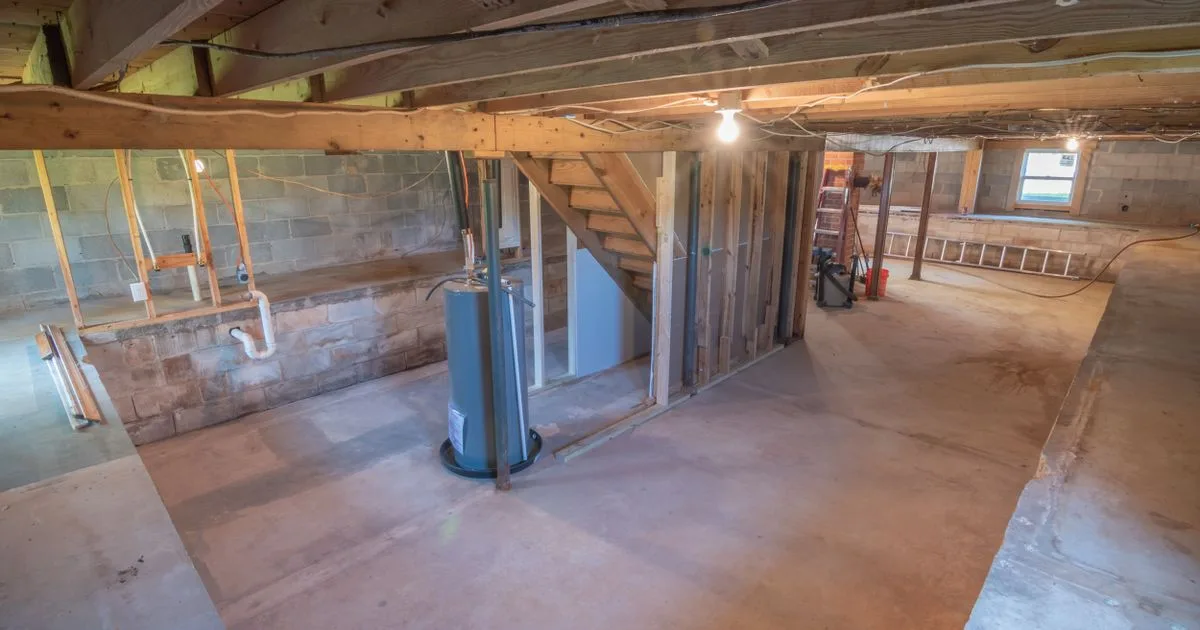
Radon in well water is mostly a breathing problem, not a drinking problem. The gas escapes water into your indoor air during showers and laundry, and there is no enforceable federal limit on it. Testing is the only way to know.
● Key Takeaways
Radon in well water is mostly an inhalation risk: it off-gasses into indoor air when you shower, run the dishwasher, or do laundry. Roughly every 10,000 pCi/L in water adds about 1 pCi/L to indoor air. There is no enforceable federal limit for radon in water; a proposed MCL of 300 pCi/L and an alternative level of 4,000 pCi/L were never finalized. Granite bedrock in New England drives the highest levels. Aeration is the most reliable treatment.
Why Is Radon in Water Mostly an Air Problem?
Radon in drinking water causes an estimated 168 cancer deaths a year in the United States, and roughly 89% of those are lung cancers from breathing the gas, not from drinking it (National Research Council, 1999). The remaining 11%, about 19 deaths, are stomach cancers from ingestion. The dominant pathway is inhalation.
Here's the mechanism. Radon dissolves readily in cold groundwater and stays trapped under pressure in your well and plumbing. The moment that water is heated or sprayed, in a shower, a dishwasher, or a hot laundry cycle, the radon comes out of solution and into the room air. It behaves like the carbonation that escapes when you open a soda.
A widely used rule of thumb quantifies the transfer: about every 10,000 picocuries per liter (pCi/L) of radon in your water adds roughly 1 pCi/L to your indoor air (National Research Council, 1999). That sounds small until you consider a tight, energy-efficient house where the air does not turn over quickly. A well running 20,000 or 50,000 pCi/L, which is not rare in granite country, can move a bathroom well past the EPA's 4.0 pCi/L air action level during and after a shower.
Most homeowners who "handled radon" tested their basement soil gas and stopped there. Radon in water and radon in soil are two separate pathways with separate tests. A clean basement result tells you nothing about what your showerhead is releasing.
Citation capsule: The National Research Council estimated in 1999 that radon in U.S. drinking water causes about 168 cancer deaths per year, roughly 89% lung cancer from inhaling gas released from water and about 11% stomach cancer from ingestion. Roughly every 10,000 pCi/L in water adds 1 pCi/L to indoor air.
[INTERNAL-LINK: radon in your shower → CT-specific Litchfield County shower radon post]
What's the Legal Limit for Radon in Well Water?
There is no enforceable federal limit. The EPA proposed a maximum contaminant level of 300 pCi/L in 1999, along with a higher alternative level of 4,000 pCi/L for states running indoor-air mitigation programs, but that rule was never finalized (U.S. EPA). Private wells fall outside the Safe Drinking Water Act entirely, so no standard binds them anyway.
This is where honest framing matters. You may see a single number quoted as "the radon limit," but the truth is messier and worth stating plainly.
| Reference point | Radon level | What it actually is |
|---|---|---|
| EPA proposed MCL | 300 pCi/L | Proposed 1999, never finalized, not enforceable |
| EPA proposed alternative (AMCL) | 4,000 pCi/L | For states with indoor-air mitigation programs, never finalized |
| EPA air action level | 4.0 pCi/L | Applies to radon in air, a separate pathway |
| Private wells | No standard | Not covered by the Safe Drinking Water Act |
Because there is no finalized, health-based water limit and no reconciled toxicology anchor for a "safe" concentration, we won't invent one. Radon has no known threshold below which the cancer risk is zero, so the honest target is "as low as reasonably achievable," measured against the air pathway you can actually control. We abstain from publishing a hard water number and point you to testing instead.
The two proposed water numbers reflect a policy trade-off, not a bright line between safe and unsafe. The 4,000 pCi/L alternative exists because, for most homes, reducing radon in indoor air is more cost-effective than scrubbing every gallon of water. That is a feasibility judgment, not a statement that 4,000 pCi/L is healthy.
Citation capsule: The EPA proposed a 300 pCi/L maximum contaminant level for radon in drinking water in 1999, with a 4,000 pCi/L alternative level for states running indoor-air mitigation programs. Neither was finalized, so there is no enforceable federal limit, and private wells are unregulated under the Safe Drinking Water Act.
Which Wells Are Most at Risk?
Radon comes from the natural decay of uranium in bedrock, so the wells with the highest levels sit on the most uranium-rich rock: granite. New England's granite and metamorphic bedrock, which underlies much of the Litchfield Hills, eastern Connecticut, New Hampshire, and Maine, produces some of the highest groundwater radon in the country (U.S. Geological Survey).
Connecticut is a clear example. Levels swing enormously well to well, driven almost entirely by which rock a well is drilled into, so two neighbors on the same road can get very different results if the bedrock shifts beneath them. What Connecticut does give you is a number to act on: CT DPH sets a recommended action level of 5,000 pCi/L for radon in well water, and advises testing if you are on a well (CT DPH, Radon in Your Well Water).
In our work with Connecticut well owners, the pattern that surprises people most is how local it is. Averages for a county tell you the geology is capable of producing high radon; they do not tell you what your individual well is doing. The only number that matters for your household is the one from your tap.
Municipal water customers usually don't share this risk. Public systems store and treat water in open tanks, which lets dissolved radon off-gas before it ever reaches a home. A private well pipes groundwater straight into your closed plumbing, radon still dissolved and under pressure. That structural difference, not water quality in the abstract, is why this is a well-owner story.
Reading this inside ChatGPT or Claude?
This page can explain the general science about your tap water, but it cannot identify what is at a specific tap or property. You can get ZIP-level context two ways:
- Inside the chat: ask your assistant to “check my tap water with CheckYourTap”. Our connector returns available public-system or regional monitoring records associated with your ZIP. It does not identify your serving utility or test your tap, well, or property. The current connector is read-only and does not email reports or submit contact information.
- On the web: open CheckYourTap.com and enter your ZIP code for a free ZIP-level report.
How Do You Test a Well for Radon?
Standard well tests miss radon almost every time. The typical mortgage or real-estate water test screens for bacteria and nitrate and stops there; radon is not included in the basic panel and most inspectors won't run it unless you ask. That is why CT DPH tells well owners to test for radon in water specifically, rather than assuming a routine panel covers it (CT DPH). So a household can "pass" its water test and still have elevated radon in every shower.
The test itself is simple and inexpensive, usually a few dozen dollars for the kit plus lab analysis. Two collection details matter because radon escapes so easily. First, draw the sample from a cold-water tap, before any existing treatment. Second, fill the vial with zero headspace, meaning no air bubbles, so the gas can't leave the water before the lab measures it.
Timing counts too. Radon-222 has a half-life of just 3.8 days, so the sample has to reach a certified lab quickly, typically by overnight shipping. Levels also shift with rainfall, barometric pressure, and season, so treat a single result as a screening snapshot, not a lifetime verdict. If it comes back elevated, that is your signal to act, not to retest indefinitely.
Citation capsule: Radon-222 has a 3.8-day half-life, so well-water samples must be collected cold, before treatment, with zero headspace, and shipped overnight to a certified lab. Standard mortgage and bacteria/nitrate well panels do not include radon, so many homes on high-radon geology have never measured it.
How Do You Remove Radon from Well Water?
If a test comes back elevated, the fix is a point-of-entry system that treats water before it enters the house, and two technologies are proven. Aeration systems remove up to about 99% of radon and are the preferred choice; granular activated carbon (GAC) works at lower levels but carries a radioactive-waste tradeoff (Water Quality Association).
Aeration mixes incoming well water with air in a sealed tank, which strips the radon out of the water and vents it outside above the roofline. It handles the whole house at once, every tap, shower, and appliance, and it does not accumulate radioactive material. It costs more upfront and needs a vent path, but for high-radon wells it is the reliable answer.
Granular activated carbon adsorbs radon onto a carbon bed. It is simpler and cheaper, but as the trapped radon decays, the carbon itself becomes radioactive and emits gamma radiation, so it needs careful siting, monitoring, and periodic replacement and disposal. For that reason GAC is generally reserved for lower concentrations and is a poor fit for the highest wells.
One point worth repeating: a pitcher filter, a fridge filter, or a standard under-sink reverse-osmosis unit will not solve a whole-house radon problem. Those treat a single drinking tap, while the inhalation risk comes from every hot-water fixture in the home. Match the treatment to the actual pathway.
Keep Reading
- Radon in your shower: the Litchfield County risk
- There's uranium in some eastern Connecticut wells, and it's not from a nuclear plant
- The water test you got when you bought your house is worthless now
Sources: U.S. EPA, Radon in Drinking Water; National Research Council, "Risk Assessment of Radon in Drinking Water," National Academies Press, 1999; U.S. Geological Survey, radon and groundwater; Connecticut Department of Public Health, radon in well water guidance; Water Quality Association, radon water-treatment fact sheets. There is no enforceable federal limit for radon in drinking water, and private wells are not regulated under the Safe Drinking Water Act; the values above are proposed or air-pathway references, not health-based safe levels. Consult a certified lab and a licensed water-treatment professional for your specific well.
