New Milford is a town of about 28,000 people in the Housatonic River valley, in the western edge of Litchfield County. It's the kind of town that people move to for the quality of life — the river, the historic green, the distance from the congestion of Fairfield County to the south. Many of the homes in the residential areas surrounding the Kimberly-Clark facility on Pickett District Road are on private wells.
In April 2024, some of those wells were tested for PFAS. The results showed PFOS and PFOA at levels that exceeded EPA health advisories.
In October 2025, a lawsuit was filed alleging that the Kimberly-Clark facility was the source of that contamination.
How Does PFAS Get from a Paper Mill into a Private Well?
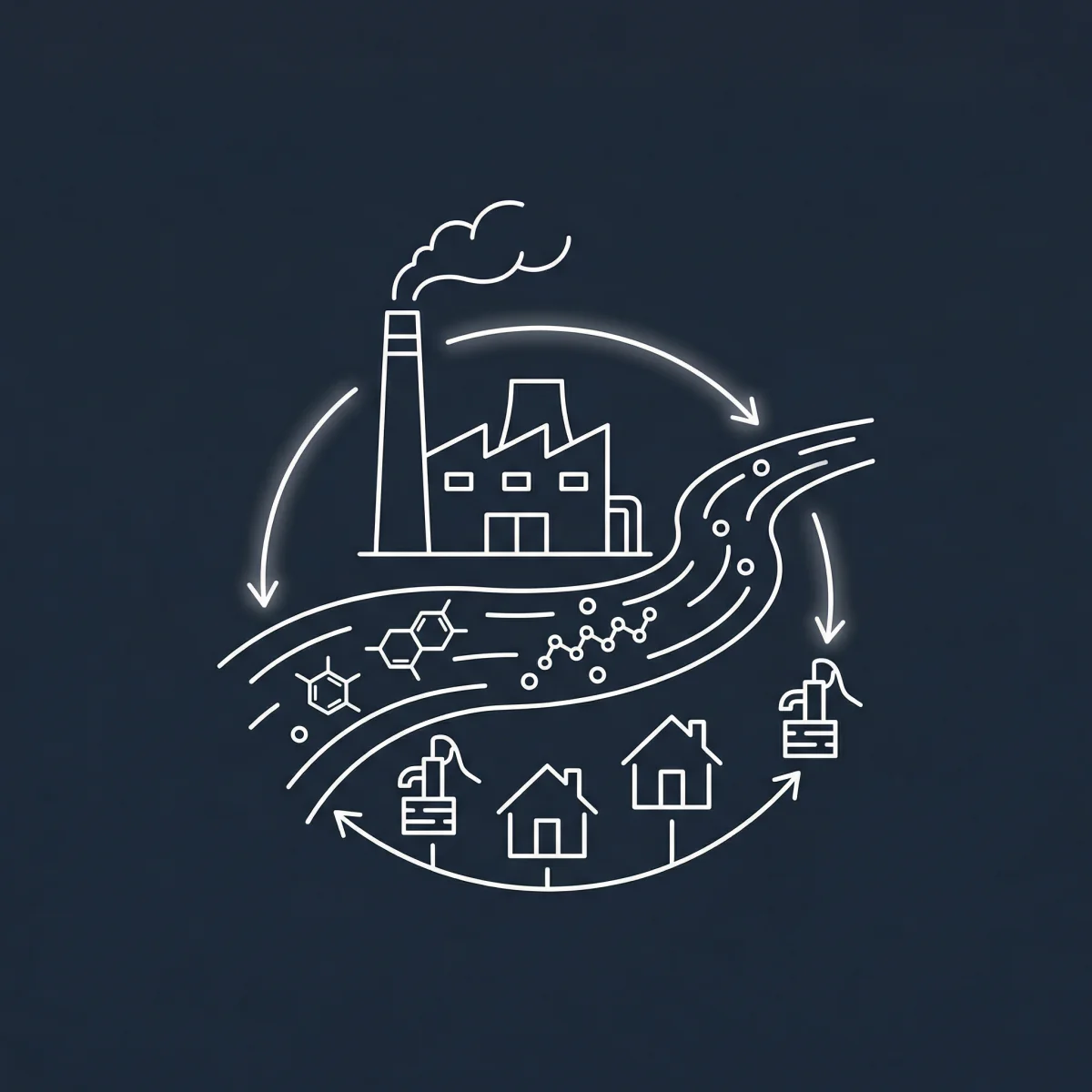
Kimberly-Clark manufactures tissue products — paper towels, toilet paper, facial tissues. The manufacturing process historically used PFAS-containing materials in several ways: as coatings to make paper products grease-resistant, as components of the manufacturing equipment, and in AFFF firefighting foam for fire suppression systems at the facility.
PFAS from these sources can enter the environment through wastewater discharge, through stormwater runoff from the facility, and through soil contamination from historical foam applications. As the USGS has documented, once in the soil, PFAS migrates downward into groundwater. In an area like New Milford, where many homes are on private wells drawing from the same aquifer, the migration path from facility to tap can be relatively direct.
The Kimberly-Clark facility has been operating in New Milford since the 1890s. That's more than a century of potential PFAS accumulation in the surrounding soil and groundwater — though PFAS-containing materials weren't widely used in manufacturing until the 1950s and 1960s.
The Broader Lesson for Litchfield County Well Owners
New Milford is in Litchfield County, which is also the county with the highest radon-in-water levels in Connecticut. Litchfield County well owners face a combination of risks that is unusual even by Connecticut standards: PFAS from industrial sources in the river valleys, radon from the granite bedrock geology in the hills, and hard water from the limestone geology in the northern parts of the county.
The standard mortgage water test covers none of these. It covers bacteria and basic minerals. If you bought a home in Litchfield County and relied on the mortgage test to tell you your water was safe, you have an incomplete picture.
The CT DEEP has a program to assist with testing and remediation costs for private wells contaminated by PFAS from identified sources. The Kimberly-Clark facility, given the lawsuit, is now a formally identified source. Homeowners in the affected area should contact CT DEEP about eligibility for assistance.
Wondering if PFAS is in your drinking water? Enter your ZIP code at CheckYourTap.com to see what's in your tap water — free, in 30 seconds.
Keep Reading
- Killingworth's Water Was Contaminated by the Town's Own Fire Department. This Is Happening Across Connecticut.
- Fairfield County Has a PFAS Problem and Your Water Bill Won't Fix It Until 2031
- Your Connecticut Water Bill Is Going Up Because of PFAS. Here's What You're Actually Paying For.
Frequently Asked Questions
Is there PFAS in New Milford Connecticut well water?
PFAS testing conducted in April 2024 found PFOS and PFOA in private wells near the Kimberly-Clark facility on Pickett District Road at levels exceeding EPA health advisories. A lawsuit filed in October 2025 alleges the facility is the contamination source. The facility has operated since the 1890s and historically used PFAS-containing materials in paper manufacturing. Not all wells in New Milford are affected — testing is the only way to know.
Can paper mills contaminate drinking water with PFAS?
Yes. Paper manufacturing historically used PFAS-containing coatings for grease resistance, PFAS in manufacturing equipment, and AFFF firefighting foam for fire suppression. PFAS from wastewater discharge, stormwater runoff, and soil contamination migrates into groundwater. In areas where homes use private wells drawing from the same aquifer, the migration path from facility to tap can be relatively direct.
What should Litchfield County well owners test for?
Litchfield County well owners face a combination of risks unusual even by Connecticut standards: PFAS from industrial sources in the river valleys, radon from granite bedrock in the hills, and hard water from limestone geology in the north. Test for PFAS, radon, uranium, arsenic, bacteria, nitrates, and hardness. The standard mortgage water test covers almost none of these. A comprehensive test costs $400–$700 through a CT DPH-certified lab.
Sources: CT Attorney General PFAS Lawsuit, January 2024; Hartford Business Journal, March 2026; CT Mirror PFAS Coverage, 2023; CT DEEP PFAS Information for Municipalities; NAVFAC PFAS Documentation.