Skip to content
PetsDogsCatsHealth

Lead Poisoning in Dogs and Cats: Why There Is No Safe Level for Your Pet's Water

7 min readBy Alexander Snyder

Key Takeaway

Lead has no safe level for dogs or cats — the goal is zero, the same position health authorities take for children. The EPA action level of 15 ppb is a legal trigger for utilities, not a safety threshold. Puppies and kittens absorb up to 50% of ingested lead, versus 5–15% in adult animals, and their immature blood-brain barrier offers less protection. In cats, lead is a recognized cause of otherwise-unexplained seizures. Test your water first, then filter with reverse osmosis if lead is present.

Lead has no safe level for dogs or cats. The goal is zero, the same position health authorities take for children. The EPA's action level of 15 ppb is a legal trigger for water utilities, not a line below which lead is safe for your pet to drink.

Key Takeaways

Lead has no safe level for dogs or cats — the goal is zero. The EPA action level of 15 ppb is a regulatory trigger for utilities, not a safety threshold. Puppies and kittens absorb up to 50% of the lead they ingest, versus 5–15% in adults, and their blood-brain barrier is still developing. In cats, lead is a recognized cause of otherwise-unexplained seizures. Test first, then filter with reverse osmosis if lead is present.

Is There a Safe Level of Lead for Dogs and Cats?

No. There is no safe level of lead for dogs or cats, and there is none for people either. Major health authorities treat lead as a contaminant with no known safe exposure, so the honest target is zero, not a number you aim to stay under (U.S. EPA, Basic Information about Lead in Drinking Water).

The EPA's 15 ppb action level is often mistaken for a safety limit. It is not. It is the level at which a water utility must take corrective steps across its system, a regulatory trigger rather than a health-based threshold. The strictest health-based benchmark, the Environmental Working Group's guideline of 0.2 ppb, reflects what protects the most vulnerable, but even that is a target to approach, not a promise of safety.

No federal agency publishes a drinking-water limit for dogs or cats. So CheckYourTap starts from the human health standard and applies documented veterinary reasoning. For lead, that reasoning does not produce a pet "safe number." It confirms the human conclusion: aim for zero. For the full derived table by life stage, see the hub pages for lead and dogs and lead and cats.

Why Are Puppies and Kittens So Vulnerable?

Puppies and kittens absorb up to 50% of the lead they ingest, compared with just 5–15% in adult animals, and their blood-brain barrier is still developing, so more lead reaches the brain (ATSDR Toxicological Profile for Lead). That combination, high absorption plus a still-forming brain barrier, is what makes early life the most dangerous window.

Here is the part worth stating carefully. The old headline that pets show harm "at lower levels than children" overstates the science. The truth is simpler and just as serious: young dogs and cats are vulnerable for the same reasons children are. Both absorb far more lead than adults. Both have immature nervous systems. Both drink more water per pound of body weight, so the same tap delivers a larger dose. We do not have a clean study showing pets are more sensitive than kids, so we do not claim it.

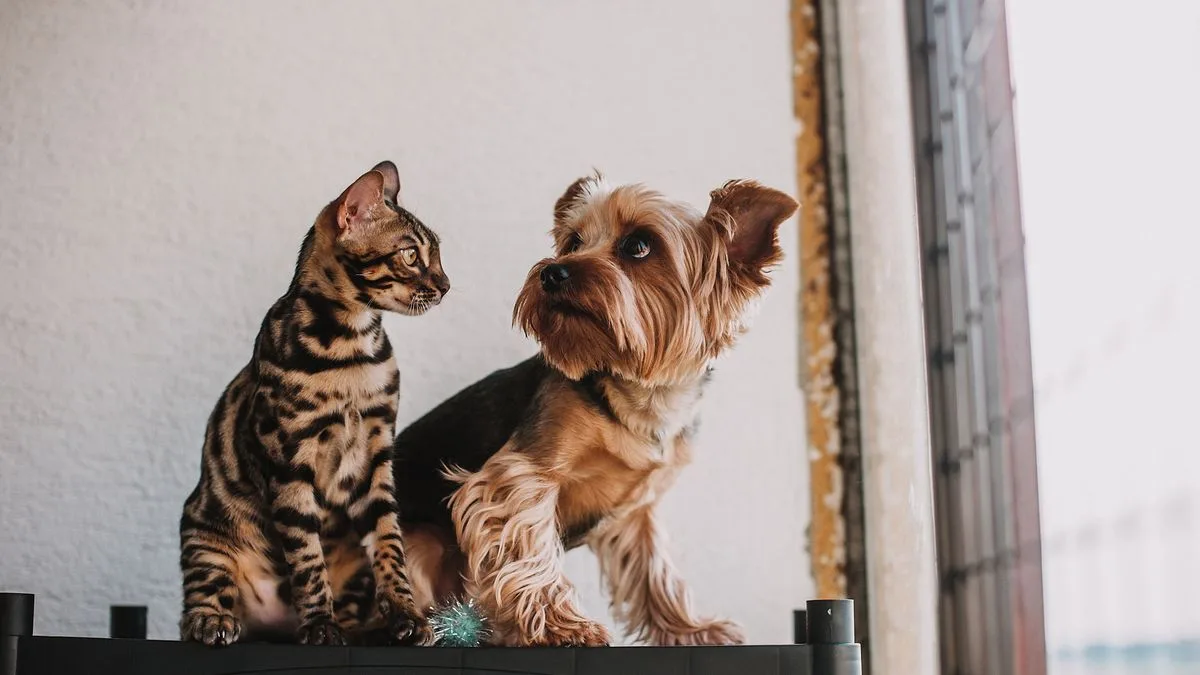
[IMAGE: A puppy and a kitten drinking from separate water bowls in a home kitchen - Pixabay search "puppy kitten water bowl"]

How Does Lead Actually Harm a Dog or Cat?

Lead causes harm by impersonating calcium. It mimics the mineral, slips across the blood-brain barrier, and jams the machinery cells use to build hemoglobin, the oxygen-carrying pigment in blood (Merck Veterinary Manual: Lead Poisoning). Because it interferes with so many basic processes, the damage shows up across several organ systems at once.

Early signs are gastrointestinal and easy to dismiss: vomiting, loss of appetite, and abdominal pain. A dog may tense its belly or whine when touched. As exposure continues and lead reaches the brain, neurological signs appear, seizures, muscle tremors, apparent blindness, and ataxia (loss of coordination). In cats, lead is a recognized cause of otherwise-unexplained seizures, so a cat with new seizures and no obvious cause deserves a lead workup.

Water is rarely the only source. Dogs and cats groom constantly, swallowing whatever dust settles on their coats, and dogs ingest soil while sniffing and digging. So the water bowl is one input to a total lead burden, which is exactly why removing lead from the water you control matters.

Reading this inside ChatGPT or Claude?

This page can tell you the general science, but not what is actually in your pet's water — that depends on your exact address. You can get your specific answer two ways:

  • Inside the chat: ask your assistant to “check my tap water with CheckYourTap”. Our connector returns your ZIP code’s measured contaminant levels — including the derived dog and cat safe levels — and, only if you ask it to, can email you the report or arrange a specialist callback.
  • On the web: open CheckYourTap.com and enter your ZIP code for a free 30-second report.

The gap between what is legal and what is safe is the whole point. Tap water can sit below the 15 ppb action level and still deliver lead to an animal for whom the goal is zero (EWG Tap Water Database). The table below shows the honest picture, not an invented pet threshold.

BenchmarkLead levelWhat it means
EPA action level15 ppbRegulatory trigger for utilities, not a safety line
EWG health guideline0.2 ppbStrictest health-based target for vulnerable individuals
Derived dog / cat levelNo safe level (goal: zero)Aim for as close to zero as possible; no number is "safe"

The derived pet level is a screening position, not a measured veterinary standard, and it lands on the same conclusion for animals that health authorities reached for children: there is no threshold below which lead is known to be harmless. For the reasoning across puppies, seniors, and pregnant or nursing pets, see the dog and cat hub pages.

Two numbers help explain why even low levels matter over time. Lead has a blood half-life of roughly 35 days, but once it settles into bone it can persist for years, quietly re-releasing into the bloodstream long after the water source is fixed (ATSDR). That slow internal reservoir is why prevention beats cleanup.

What Should You Do About Lead in Your Pet's Water?

Start by finding out whether lead is even present, because filtering blind wastes money on a problem you may not have. Roughly 9.2 million lead service lines still deliver water to U.S. homes, so the risk is real but far from universal (EPA 7th Lead and Copper Rule survey, 2023). Your specific address is what matters.

  1. Test first. Check your address to see what is measured in your water and whether lead is a concern where you live.
  2. Match the filter to the certification. For lead, reverse osmosis is the most complete option and can remove up to about 99%. A carbon block certified to NSF/ANSI Standard 53 for lead reduction also works. A basic pitcher or a filter rated only for taste and odor will not.
  3. Give the filtered water to your pet. Fill the bowl from the filtered tap, run the tap briefly after long periods of standing, and bring filtered water when you travel rather than trusting unknown sources.
  4. Watch for early signs. Vomiting, appetite loss, or new neurological changes, especially seizures in a cat, warrant a call to your veterinarian, who can confirm lead with a blood test.

If you have a young puppy or kitten, or a pet that is pregnant or nursing, the case for testing is stronger, because those are exactly the animals that absorb the most lead and have the least protection against it.

Keep Reading

Sources: U.S. EPA, Basic Information about Lead in Drinking Water and the Lead & Copper Rule (2023 service-line survey); ATSDR Toxicological Profile for Lead; Environmental Working Group Tap Water Database; Merck Veterinary Manual, "Lead Poisoning in Animals"; Bischoff K, "Toxicity of Lead in Dogs and Cats," Veterinary Clinics of North America: Small Animal Practice, 2012. Lead has no established safe level for dogs or cats; derived pet positions are screening estimates from human health standards plus veterinary reasoning, not measured veterinary standards. Consult your veterinarian.

Frequently Asked Questions

Is there a safe level of lead in water for dogs and cats?
No. Lead has no established safe level for dogs or cats — the goal is zero exposure, the same position health authorities take for children. The EPA's action level of 15 ppb is a regulatory trigger for water utilities, not a threshold below which lead is safe to drink. Because puppies and kittens absorb up to 50% of the lead they ingest, versus 5–15% in adults, the honest target is to keep lead as close to zero as possible rather than aiming for a number.
What are the symptoms of lead poisoning in dogs and cats?
Early signs are gastrointestinal and easy to miss: vomiting, loss of appetite, and abdominal pain. As lead crosses the blood-brain barrier, neurological signs follow — seizures, tremors, apparent blindness, and loss of coordination (ataxia). In cats specifically, lead is a recognized cause of otherwise-unexplained seizures, so a cat with new seizures and no clear cause should be evaluated for lead (Merck Veterinary Manual). If you suspect exposure, see your veterinarian; a blood lead test confirms it.
Why are puppies and kittens more vulnerable to lead?
Young animals absorb up to 50% of the lead they ingest, compared with 5–15% in adults, and their blood-brain barrier is not yet fully developed, so more lead reaches the brain. They also drink more water per pound of body weight, which raises the dose from the same tap. This is the same biology that makes human children highly vulnerable — young dogs and cats are vulnerable for the same reasons, not because they are more sensitive than kids.
How do I remove lead from my pet's water?
Reverse osmosis is the most complete option and can remove up to about 99% of lead. A carbon block filter certified to NSF/ANSI Standard 53 for lead reduction also works, but a basic carbon or pitcher filter rated only for taste and odor will let lead through. Match the filter to the certification, not the marketing. Test your water first so you know whether lead is actually present before you buy anything.
AS

Alexander Snyder

Founder & Water Quality Data Lead, CheckYourTap

Alexander Snyder is the founder of CheckYourTap and leads its water-quality data pipeline, integrating EPA, USGS, OEHHA, and EWG datasets into per-population-group health thresholds that go beyond what the law requires — what's actually safe, not just legal.

Connect on LinkedIn →

Stay informed about CT water quality

Get alerts when new data is published about Pets in Connecticut drinking water.

No spam. Just water quality alerts for Connecticut.