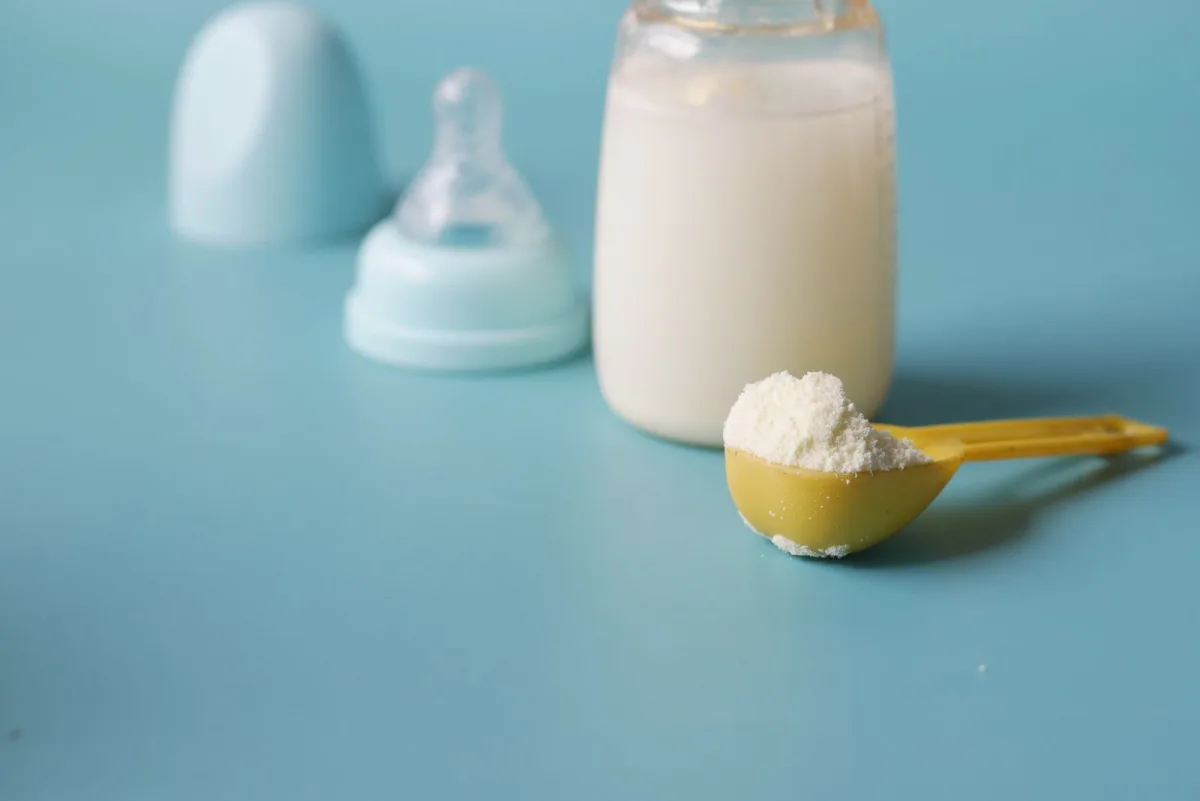
The best water for baby formula is tap water filtered through reverse osmosis, or distilled water, because plain tap, standard bottled, and "nursery water" each fail a different test. Formula-fed newborns drink 146 mL of water per kilogram of body weight in the first month of life, so contaminants hit them harder than anyone else. Arsenic's infant-protective level is 0.004 ppb, 2,500 times below the 10 ppb legal limit (OEHHA, 2004), and for lead, health agencies recognize no safe level at all.
For a formula-fed baby, water isn't a side note. It is the diet. If an adult drank the same volume relative to body weight, they'd be putting away more than two gallons a day. That single fact reshapes what "clean enough" means, and it's why the label on the jug matters as much as the powder inside the can.
This is a national guide, not tied to one state. Below is what "safe" actually means for the five contaminants that matter most when you're mixing a bottle, and why each common water source falls short in its own way.
Legal Limits vs. Safe Levels for Formula Water
Federal legal limits were built around average adult body weights and what utilities can affordably treat, not around a 4-kilogram newborn on a 100% liquid diet. The table below compares the EPA legal limit, the Environmental Working Group (EWG) health guideline, and the health-protective safe level we publish for formula-fed newborns. The last column is the health number, not the legal one.
| Contaminant | EPA Legal Limit | Health Guideline | CheckYourTap Safe Level (Newborn / Formula) |
|---|---|---|---|
| Lead | 15 ppb action level (dropping to 10 ppb by 2027) | 0.2 ppb (California OEHHA Public Health Goal, 2009, general population) | No safe level, target 0 |
| Arsenic | 10 ppb | 0.004 ppb (OEHHA, 2004) | 0.004 ppb, 2,500x below legal |
| Nitrate | 10 mg/L (as N) | 0.14 mg/L (EWG) | 0.14 mg/L (as N), ~70x below legal |
| Fluoride | 4.0 mg/L | 1.0 mg/L (OEHHA PHG) | Below 0.7 mg/L for bottle-fed infants (EWG) |
| PFOA | 4 ppt (2024 MCL) | 0 (EPA health goal) | No safe level, target near 0 |
Two rows have no "safe" number we can fill in. Lead and PFOA both carry a health goal of zero, so we record no safe level rather than invent a small positive one. Arsenic's legal limit sits 2,500 times above the health guideline. Nitrate's sits about 70 times above it.
Why Does Formula Water Matter So Much for a Newborn?
A newborn's exposure to waterborne contaminants can run several times higher, pound for pound, than an adult's, because intake relative to body weight peaks in the first months of life at roughly 150 mL/kg/day (EPA Exposure Factors Handbook, Chapter 3, water ingestion for formula-fed infants). Formula reconstituted with tap water becomes the near-total source of daily fluid, so whatever is in the water is delivered at maximum concentration to organs that are still forming.
A newborn is not a small adult. The enzymes that break down toxins are still coming online, running at a fraction of adult activity on many pathways. A baby's gut absorbs metals like lead at 40 to 50%, against roughly 10% in adults (CDC). And the barrier protecting the brain is more porous. Water an adult clears without noticing can reach a newborn's brain and bone.
High intake, low defenses. That combination is why a "legal" water report can still describe water that's wrong for a bottle. The compliance test answers a regulatory question. Nobody designed it around infant biology.
Why Isn't Tap Water Safe Straight From the Sink?
Unfiltered tap water is the highest-risk choice for mixing formula, even when your utility meets every federal standard, because the legal ceilings for lead, arsenic, and nitrate all sit far above the infant-protective levels. A clean annual water report can still describe water carrying 10 ppb arsenic, 70 times the nitrate guideline, and lead leached from household plumbing after the water leaves the treatment plant.
Three contaminants drive the risk. Lead enters through aging service lines and fixtures, and there is no threshold below which it's considered safe for a developing brain. Arsenic, a known human carcinogen, is absorbed more readily by infants and is linked to lasting cognitive and neurodevelopmental deficits (Tolins et al., 2014). Nitrate, mostly from agricultural runoff and septic systems, is the classic newborn hazard.
Nitrate deserves a closer look, because the danger is specific to how a baby's body works. A newborn's stomach is less acidic than an adult's, which lets bacteria convert nitrate into nitrite. The nitrite then changes the baby's hemoglobin into a form that can't carry oxygen, a condition known as "blue baby syndrome" (Knobeloch et al., 2000). The EPA's 10 mg/L limit dates to 1962 and was written to prevent that acute emergency. EWG's 0.14 mg/L guideline aims at the longer-term cancer and hormone risks instead, and that's the number we publish for infants.
One more myth worth killing. Boiling does not make tap water safe for formula. It kills microbes, sure. It also evaporates water and concentrates lead, arsenic, and nitrate, leaving slightly more contaminant per ounce, not less.
Is Bottled or "Nursery Water" Any Safer?
Bottled water is not automatically safer than tap for formula, because the FDA regulates it to standards that largely mirror the EPA's tap water limits. Standard "spring water" or "drinking water" can still contain trace arsenic and nitrate, plus microplastics shed from the bottle itself. Buying bottled trades one set of unknowns for another.
"Nursery water" adds a twist people rarely expect: fluoride. Many nursery-water brands add fluoride, and the EWG notes that even the standard 0.7 mg/L fluoridation level is likely too high for bottle-fed babies. Formula powder already contains fluoride, so mixing it with fluoridated water stacks the dose and raises the risk of dental fluorosis, the discoloration of developing teeth (CDC, infant formula and fluorosis). More fluoride is not the goal here.
Then there's PFOA, one of the "forever chemicals." The EPA's 2024 rule set an enforceable limit of 4 ppt, but its health-based goal for PFOA is zero, because it's treated as a likely carcinogen with no safe threshold (EPA; EFSA, 2020). PFAS cross into formula-fed infants at high relative doses and are linked to weakened vaccine response in exposed children (Grandjean et al., 2012). Bottled water is not screened for PFOA in any way you can see on the label.
If you do reach for a bottle, the words to look for are "purified" or "distilled," which signal reverse osmosis or distillation, not "spring" or "nursery."
What Water Should You Actually Use for Formula?
Filtering your own tap water is the most reliable and cost-effective way to hit the infant-protective levels, provided you use the right technology. Standard carbon pitcher filters and refrigerator filters improve taste and cut chlorine, but they do not reliably remove nitrate or arsenic, the two contaminants that most often exceed infant guidelines.
Three technologies do the job:
- Reverse osmosis (RO) is the practical gold standard for formula. Its membrane pores are near 0.0001 microns, small enough to remove up to about 99% of nitrate, arsenic, lead, PFOA, and microplastics in one pass. Because RO also strips minerals, that's fine here: formula is already nutritionally complete, so you don't need to remineralize water used for bottles. Here's exactly what reverse osmosis removes.
- Ion exchange resins built specifically for nitrate are worth adding if you're on private well water in a farming area, where nitrate runoff runs high.
- Activated alumina targets arsenic and fluoride and works well as a point-of-entry option for wells with elevated arsenic.
Distilled bottled water is a fine backup when you can't filter at home, since distillation removes the same broad range of contaminants. The point is to match the water to the threat, not to trust a marketing label.
Why Newborn References Need Separate Context
CheckYourTap compares available records with authority-published health references and clearly labeled derived population estimates. Those comparisons do not establish a safe level, exposure, or health risk for a person or property; confirm the source and use a certified property sample.
That's a slower way to build a database. Working contaminant by contaminant and group by group takes more effort than repeating a single legal limit. We also draw the line at "healthy" rather than "legal," since legal limits weigh treatment cost and feasibility alongside health. Personalized reports currently cover Connecticut, and we're expanding to more states.
For a formula-fed baby, the safest way to read any water source is to assume the label is answering a different question than the one you're asking. Then filter for the threats that actually reach a newborn.
This article is for general information and is not medical advice. Talk to your pediatrician about your baby's water source, formula preparation, and any health concerns.
Keep Reading
- Is Tap Water Safe During Pregnancy? The Gap Between Legal and Safe
- Is Bottled Water Safer Than Tap During Pregnancy? What the Microplastic Data Shows
- Reverse Osmosis: What It Actually Removes From Your Water
- Nitrate in Well Water and Neural Tube Defects
- Lead: sources, health effects, and safe levels
- Arsenic: sources, health effects, and safe levels
- Nitrate: sources, health effects, and safe levels
Sources: California OEHHA Public Health Goals (arsenic, 2004; lead PHG, 2009; fluoride PHG); EWG Tap Water Database (health guidelines for nitrate and infant fluoride); EPA National Primary Drinking Water Regulations (legal limits); EPA Lead and Copper Rule; CDC Lead in Drinking Water; EPA PFAS (2024 rule); EFSA PFAS opinion, 2020; Knobeloch et al., Environmental Health Perspectives, 2000 (nitrate and blue baby syndrome); Tolins et al., Annals of Global Health, 2014 (arsenic developmental neurotoxicity); Grandjean et al., JAMA, 2012 (PFAS and vaccine response); CDC, Infant Formula and Fluorosis (fluoride in reconstituted formula and dental fluorosis).
