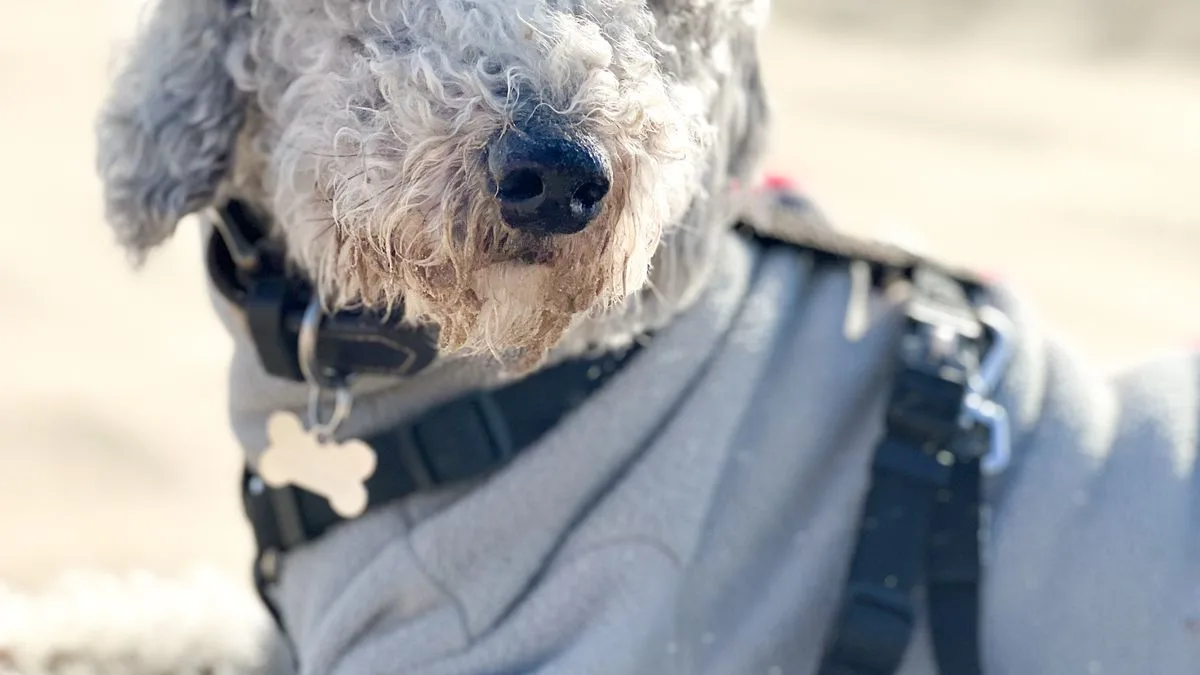
Bedlington Terriers carry a genetic quirk that turns an ordinary glass of tap water into something worth thinking about. A recessive deletion in the COMMD1 gene stops their liver from clearing copper, so it accumulates for life. That doesn't mean tap water is poison. It means the right copper level for this breed is much lower than the legal one, and the only way to know yours is to test.
● Key Takeaways
Bedlington Terriers can inherit a recessive COMMD1 gene deletion that stops the liver from excreting copper, so it accumulates for life. The EPA copper action level is 1.3 ppm, set to prevent stomach upset in people. For a copper-storage breed, our derived screening estimate is about 0.1 ppm (100 ppb), roughly 13× stricter, because copper adds up from food and water together. It's a labeled precaution, not a measured veterinary limit. Test your water first.
Why the Legal Copper Limit Doesn't Fit This Breed
The EPA sets a copper action level of 1.3 ppm (1,300 ppb) in drinking water, and that number is built around a healthy human stomach, not a dog's liver. It's designed to prevent short-term gastrointestinal upset in people (EPA Lead & Copper Rule). The assumption baked into it is that a normal mammal can excrete the copper it doesn't need. A healthy dog does exactly that, clearing most ingested copper through bile.
A Bedlington Terrier with two copies of the COMMD1 deletion can't. So the same water that's legally and biologically fine for you, and fine for most other dogs, becomes a slow addition to a burden the dog can never unload. For an affected dog, the meaningful question isn't "is this water legal?" It's "how much copper is my dog taking in from every source combined?" That's a genetics question, not a plumbing-code one.
What Copper Level Is Actually Safe for a Bedlington?
There's no federal agency that publishes a drinking-water copper limit for dogs, so CheckYourTap derives one. For copper-storage breeds, veterinary literature points to keeping total copper intake very low, and our derived screening estimate for drinking water is about 0.1 ppm (100 ppb), roughly 13 times stricter than the EPA's 1.3 ppm. This is a labeled precaution, not a measured veterinary standard.
Here's the honest reasoning. The 0.1 ppm figure isn't a number some agency validated for dogs. It reflects that an affected Bedlington accumulates copper from food and water together, with no working exit route, so the defensible move is to minimize every input. We treat it as a screening estimate to flag water worth filtering, not a diagnosis.
| Standard | Copper level | What it's based on |
|---|---|---|
| EPA action level | 1.3 ppm (1,300 ppb) | Prevents short-term stomach upset in people |
| EWG health guideline | 0.3 ppm (300 ppb) | Precautionary guideline for vulnerable humans |
| Derived copper-storage-breed estimate | ~0.1 ppm (100 ppb) | Screening precaution for COMMD1/copper-storage dogs |
For the full derived table across life stages, and the veterinary reasoning behind each value, see the dedicated hub page on copper and dogs.
How the COMMD1 Deletion Traps Copper
Copper toxicosis in Bedlington Terriers traces to a single, well-documented defect: an autosomal-recessive deletion in the COMMD1 gene (originally named MURR1), characterized by Forman and colleagues in 2005 (Forman et al., 2005, Animal Genetics). A dog needs two copies of the deletion to be affected, which is why careful breeding and DNA testing have reduced, though not erased, the problem.
In a healthy dog, the COMMD1 protein helps shuttle surplus copper into bile for excretion. Remove that function and the copper has nowhere to go. It stays locked inside liver cells and builds up year after year. Affected livers can reach copper concentrations many times the normal range, and that overload drives oxidative damage: progressive cell death, chronic hepatitis, cirrhosis, and in acute crises, a sudden breakdown of red blood cells (Fieten & Rothuizen, 2018, Vet Clin North Am).
Because the damage is cumulative, there's no single "toxic glass." It's the total, taken day after day, that matters. That's exactly why waterborne copper deserves attention even when each individual reading looks modest. Diet is the biggest lever, and low-copper prescription food is the veterinary standard of care, but water is a second input that quietly undermines a carefully managed diet if it's high.
Reading this inside ChatGPT or Claude?
This page can tell you the general science, but not what is actually in your dog's water — that depends on your exact address. You can get your specific answer two ways:
- Inside the chat: ask your assistant to “check my tap water with CheckYourTap”. Our connector returns your ZIP code’s measured contaminant levels — including the derived dog and cat safe levels — and, only if you ask it to, can email you the report or arrange a specialist callback.
- On the web: open CheckYourTap.com and enter your ZIP code for a free 30-second report.
Where Does the Copper in Tap Water Come From?
Copper is rarely in the source water itself. It usually enters at your own plumbing, which is why two houses on the same street can test very differently. Copper pipes corrode, and the metal leaches into water that sits in them. The longer water stagnates, the more copper it picks up, so the bowl you fill first thing in the morning can carry the highest reading of the day.
Water chemistry decides how bad it gets. Acidic, low-pH, or otherwise corrosive water pulls more copper out of the pipes. Homes on private wells lack the corrosion-control treatment that municipal systems add, so leaching can run higher and unmonitored. None of this is unique to Bedlington owners, but for a copper-storage breed it's the difference between a shrug and a filter. The only way to know your number is to measure it at the tap.
Keep Reading
- Copper and dogs: derived safe levels and the copper-storage breeds
- Is tap water safe for dogs? What EPA limits miss about canine physiology
- CheckYourTap for Pets: how we derive safe levels for dogs and cats
Sources: U.S. EPA National Primary Drinking Water Regulations and Lead & Copper Rule (copper action level 1.3 ppm); Environmental Working Group Tap Water Database (copper); Forman OP et al., "Characterization of the COMMD1 (MURR1) mutation causing copper toxicosis in Bedlington terriers," Animal Genetics, 2005; Fieten H & Rothuizen J, "Copper toxicosis in dogs," Veterinary Clinics of North America: Small Animal Practice, 2018; Merck Veterinary Manual. The ~0.1 ppm copper-storage-breed figure is a derived screening estimate from human health standards plus veterinary literature on copper-storage breeds, not a measured veterinary standard. Consult your veterinarian.