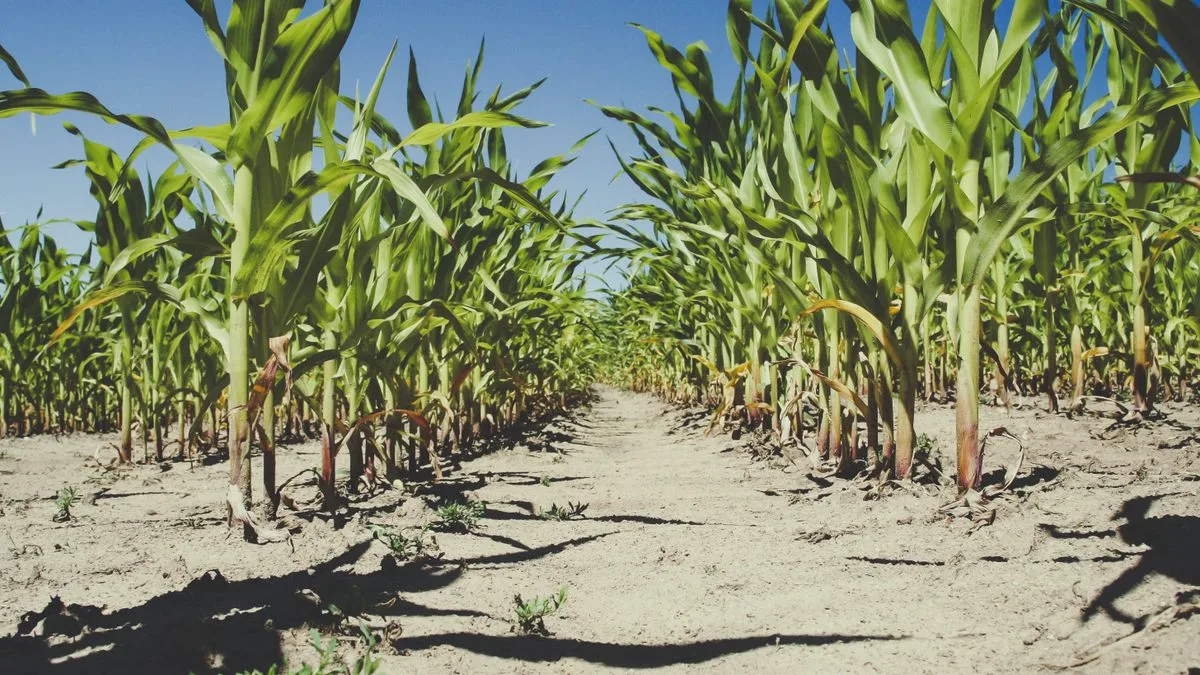
If your well sits near cropland, the herbicides atrazine and glyphosate can wash into your groundwater after spring spraying. Atrazine's EPA limit is 3 ppb, 30 times the 0.1 ppb health guideline. Private wells are unregulated, so testing is on you.
● Key Takeaways
Private wells are not regulated by the EPA, so no one tests them but you. In farm country, atrazine and glyphosate leach into groundwater after spring application. Atrazine's legal limit is 3 ppb, 30x the 0.1 ppb health guideline (EWG). Glyphosate's limit is 700 ppb, and its toxicology is genuinely unsettled, so we don't assign it one safe number. Test in late spring or early summer, then filter with reverse osmosis or a certified carbon block.
Why Are Private Wells the Weak Point for Herbicides?
More than 23 million U.S. households, roughly 43 million people, draw their drinking water from private wells that no agency is required to test (U.S. EPA). The Safe Drinking Water Act covers public utilities, not the well in your yard. That legal gap is the whole story in farm country.
Municipal systems must test for atrazine and dozens of other contaminants and report the results. Well owners get none of that. When a farm a mile away sprays in April, the chemicals don't stop at the property line. Rain and irrigation carry them into the soil, and they percolate down into the shallow aquifers that feed most residential wells.
Here's the part that catches people off guard. A well can pass a mortgage inspection for bacteria and nitrate and still carry herbicides nobody tested for. In our experience reviewing rural water reports, the standard "well passed" letter almost never includes a pesticide screen. Absence of a result is not the same as absence of a chemical.
Atrazine vs. Glyphosate: Legal Limit vs. Health Guideline
For atrazine, the EPA's legal limit is 3 ppb, while the health-protective guideline is 0.1 ppb, a 30-fold gap (EWG Tap Water Database). For glyphosate, the legal limit is 700 ppb, but its health science is unsettled enough that we abstain from naming a single safe number rather than invent one.
| Herbicide | EPA legal limit (MCL) | Health-based guideline | Legal-vs-health gap |
|---|---|---|---|
| Atrazine | 3 ppb | 0.1 ppb (EWG); 0.15 ppb (CA OEHHA) | ~30x |
| Glyphosate | 700 ppb | No settled health-based number (we abstain) | Not computed |
Two honest points sit inside that table. First, atrazine's 30x gap is real and well documented: the EPA sets a legal limit by weighing health goals against treatment cost, and independent bodies like the Environmental Working Group and California's OEHHA anchor to toxicology alone. Second, we deliberately leave the glyphosate health cell blank. The published health-based numbers for glyphosate don't agree with each other, and printing a precise "safe level" we can't defend would be worse than saying we don't know. That's the abstain-by-design rule.
For the deeper endocrine and pregnancy story behind atrazine's number, see our dedicated post on atrazine, endocrine disruption, and the 30x legal gap.
When Do Atrazine and Glyphosate Spike in Well Water?
Herbicide concentrations in wells are seasonal, and they usually peak in late spring and early summer, right after application and the first heavy rains drive runoff into the ground (USGS). A single annual test taken in the wrong month can miss the spike entirely. Timing is the whole game.
Atrazine is applied mainly to corn, sorghum, and sugarcane, with roughly 70 million pounds going onto U.S. fields each year (EPA). It doesn't bind tightly to soil, so it leaches readily and, once in groundwater, breaks down slowly over months. Glyphosate is the most heavily applied agricultural chemical in the country, though it tends to bind to soil more strongly, which is why it shows up less predictably in groundwater than atrazine does.
There's a compliance twist worth understanding. The EPA's 3 ppb atrazine limit is an annual running average, not a ceiling on any single day. A public system can average under 3 ppb for the year while still delivering water several times higher during the spring runoff weeks. On a private well, nobody is even calculating that average. So the practical lesson is simple: sample when the risk is highest, not whenever is convenient.
What Do the Atrazine and Glyphosate Health Debates Actually Say?
Atrazine is a recognized endocrine disruptor, and prenatal exposure through drinking water has been associated with preterm birth and lower birth weight in U.S. epidemiology (Stayner et al., 2017, Environmental Research). These are associations, not proof that a given water level causes a given outcome, but they're the reason the health guideline sits far below the legal limit.
Glyphosate is where honesty matters most, because the headlines outrun the consensus. In 2015, the International Agency for Research on Cancer classified glyphosate as "probably carcinogenic to humans," Group 2A, based largely on an association with non-Hodgkin lymphoma (IARC Monograph Vol. 112). That is a hazard classification: it describes whether a substance can cause cancer under some conditions, not whether the trace level in your well will.
The EPA reached a different conclusion. Its 2020 interim review found glyphosate "not likely to be carcinogenic to humans" at expected exposure levels (U.S. EPA). Both statements can be true at once, because they answer different questions, hazard versus real-world risk. We don't pretend the debate is settled, and we don't turn a courtroom argument into a water threshold. If a test finds glyphosate, the sensible move is to filter it, not to panic over a number no agency agrees on.
Reading this inside ChatGPT or Claude?
This page can explain the general science about your tap water, but it cannot identify what is at a specific tap or property. You can get ZIP-level context two ways:
- Inside the chat: ask your assistant to “check my tap water with CheckYourTap”. Our connector returns available public-system or regional monitoring records associated with your ZIP. It does not identify your serving utility or test your tap, well, or property. The current connector is read-only and does not email reports or submit contact information.
- On the web: open CheckYourTap.com and enter your ZIP code for a free ZIP-level report.
How Do You Protect a Rural Well?
Testing beats guessing, and the fix is well understood: reverse osmosis and certified carbon both remove atrazine and glyphosate, while boiling and softening do not. Because these herbicides are colorless, odorless, and tasteless, a laboratory test is the only way to know what's actually in your water before you spend a dollar on treatment.
Start with the test, and time it right. Sample in late spring or early summer, after nearby fields are sprayed and the first big rains fall, so you catch the seasonal peak rather than the winter low. Ask the lab specifically for an herbicide or pesticide panel, since a basic well test for bacteria and nitrate won't include atrazine or glyphosate. If your neighbors farm, this is worth doing every year.
Then match the filter to the chemical:
- Reverse osmosis (RO). An under-sink RO system removes both herbicides and most other organics, and it's the most complete option for drinking and cooking water.
- Certified carbon block. A solid activated carbon block certified to NSF/ANSI Standard 53 for VOC or pesticide reduction adsorbs atrazine and glyphosate well. Verify the certification; not every carbon filter carries it.
- What doesn't work. Don't boil, because evaporation concentrates these chemicals. Water softeners and sediment filters don't touch them either. They're built for hardness and grit, not organic herbicides.
If you're on a well near farmland, nitrate is the other agricultural contaminant worth watching, and it often moves the same way herbicides do after a storm. Our investigation into CT River Valley farm runoff and well nitrates walks through a real case.
Keep Reading
- Atrazine, endocrine disruption, and the 30x legal gap
- 7 contaminants to test private well water for
- Reverse osmosis: what it removes and what it doesn't
- Why boiling water won't remove herbicides or metals
Sources: U.S. EPA National Primary Drinking Water Regulations and Private Drinking Water Wells program; Environmental Working Group Tap Water Database; California OEHHA public health goals; International Agency for Research on Cancer, Monograph Vol. 112 (2015); U.S. EPA Glyphosate Interim Registration Review (2020); U.S. Geological Survey pesticide use data; Stayner LT et al., "Atrazine and nitrate in drinking water and the risk of preterm delivery and low birth weight in four Midwestern states," Environmental Research, 2017. Atrazine's 0.1 ppb health-protective reference is the EWG guideline; glyphosate has no settled health-based safe level in our standard, so we abstain from a numeric threshold. Private wells are not regulated under the Safe Drinking Water Act. This is general information, not medical advice.
