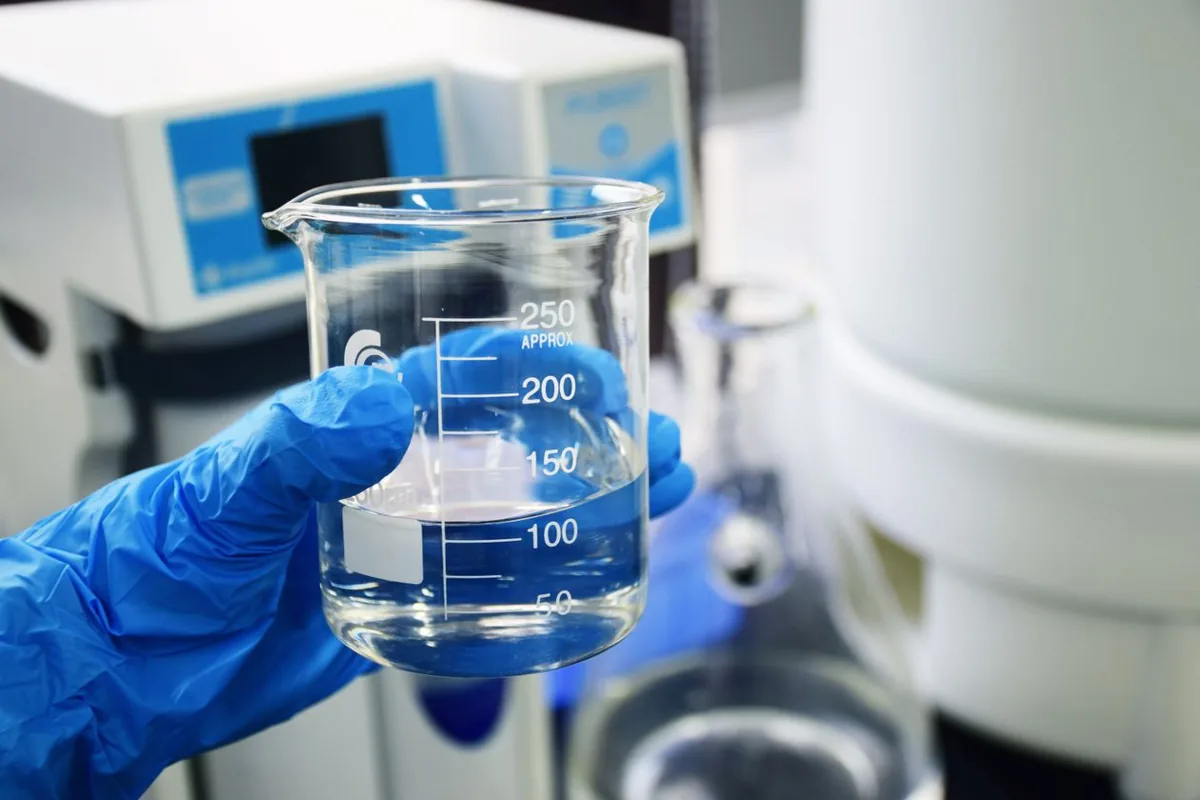
At the levels allowed in regulated tap water, thallium is not a plausible cause of hair loss. Thallium famously causes alopecia, but only at poisoning doses far above the legal limit. Here is the math that shows why.
● Key Takeaways
Thallium is a well-documented cause of hair loss, but only at poisoning-level doses, not trace amounts in regulated water. Deriving a hair-safe screening level gives about 14 ppb (14 µg/L). The EPA legal limit is 2 ppb, roughly 7× lower. At or below the legal limit, thallium is not a plausible cause of hair loss. This is one case where the law is genuinely protective, and we say so plainly.
Does Thallium Really Cause Hair Loss?
Yes. This part is not a myth. Thallium is one of the most reliably documented causes of hair loss in the toxicology literature. A 2018 systematic review in Skin Appendage Disorders concluded that the agents with the strongest evidence of causing alopecia include thallium, mercury, selenium, and colchicine (Yu et al., 2018). Hair loss is such a hallmark of thallium poisoning that it has historically helped doctors recognize the diagnosis.
In poisoning cases, the pattern is distinctive. Hair typically begins falling out about one to three weeks after a significant exposure, as thallium disrupts the sulfur chemistry inside the hair follicle. But every one of those documented cases shares one feature that matters enormously for tap water: the exposure was a poisoning, not a trace. Contaminated supplements, industrial accidents, and deliberate poisoning are the real sources. Municipal drinking water is not on that list.
How Much Thallium Does It Actually Take?
This is where an honest analysis has to show its work. The toxicology anchor comes from an oral study used by the ATSDR and EPA's IRIS program. In a 90-day study in female rats, researchers found two key doses:
- The highest daily dose that caused no follicle damage was 0.04 mg/kg/day. Toxicologists call this the NOAEL, the no-observed-adverse-effect level.
- The lowest dose where follicle shrinkage and hair loss began was 0.2 mg/kg/day, known as the LOAEL, the lowest-observed-adverse-effect level (ATSDR Toxicological Profile for Thallium). The same no-harm dose underlies EPA's IRIS assessment for thallium.
To turn a lab dose into a hair-safe drinking-water number, we use the same standard method regulators use, and we show every step:
| Step | Calculation | Result |
|---|---|---|
| Start with the no-harm dose (NOAEL) | 0.04 mg/kg/day | 0.04 mg/kg/day |
| Apply a 100× safety factor | ÷ 100 | 0.0004 mg/kg/day |
| Scale to a 70 kg adult | × 70 kg | 0.028 mg/day |
| Divide by daily water intake | ÷ 2 L/day | 0.014 mg/L |
| Convert to parts per billion | × 1,000 | ≈ 14 ppb |
That 100× safety factor is the conventional cushion: 10× for the differences between rats and humans, and another 10× for the differences among people. So a genuinely conservative, hair-safe screening level for thallium in drinking water lands at roughly 14 µg/L (14 ppb).
Legal Limit vs. Hair-Safe Level: The Numbers
Now compare that derived screening level to what the law actually allows:
| Standard | Thallium level | Note |
|---|---|---|
| EPA MCLG (health goal) | 0.5 ppb | Non-enforceable goal with a built-in margin |
| EPA MCL (legal limit) | 2 ppb | Enforceable limit for public water systems |
| Derived hair-safe screening level | ≈ 14 ppb | Our transparent calculation, above |
| Poisoning-level alopecia | Far higher | Acute, high-dose exposure (poisoning-level serum concentrations) |
The EPA legal limit of 2 ppb sits about 7× below the level where hair loss becomes a plausible concern. In plain terms: if your water meets the legal thallium standard, thallium is not a credible explanation for hair loss. Thallium alopecia is a poisoning phenomenon, not a tap-water one.
Reading this inside ChatGPT or Claude?
This page can explain the general science about your tap water, but it cannot identify what is at a specific tap or property. You can get ZIP-level context two ways:
- Inside the chat: ask your assistant to “check my tap water with CheckYourTap”. Our connector returns available public-system or regional monitoring records associated with your ZIP. It does not identify your serving utility or test your tap, well, or property. The current connector is read-only and does not email reports or submit contact information.
- On the web: open CheckYourTap.com and enter your ZIP code for a free ZIP-level report.
Why We're Telling You Not to Worry
CheckYourTap exists because legal limits often under-protect. Many were written decades ago, for average adults, and can lag behind newer science. We say that loudly when it's true, as with thallium's neurological effects, where the margin is thinner.
But intellectual honesty cuts both ways. For hair loss specifically, the thallium limit is genuinely protective, so we're not going to manufacture fear to sell a filter. A 7× margin is comfortable. Not enormous, but comfortable. And that modest cushion is exactly why the MCL exists at 2 ppb rather than 14. Regulators build in headroom on purpose, because real water varies and thallium has other health effects beyond hair. The limit is doing its job here.
If you're losing hair and looking for a cause, tap water thallium is almost certainly a dead end. The far more common culprits are genetics, thyroid issues, iron deficiency, stress, and medications. And where minerals are concerned, some people attribute breakage to hard water on hair and scalp, which is a different question entirely.
When Thallium Is Worth Testing For
None of this means thallium never matters. It means the hair-loss angle is the wrong reason to worry. Thallium is worth checking when:
- You're on a private well near historic mining, smelting, or coal-ash sites, where groundwater thallium can climb.
- Your utility's Consumer Confidence Report shows a detection approaching the 2 ppb limit.
- You want certainty rather than assumption. The only way to know your actual number is to see your data.
If a test ever did show thallium near or above the limit, a reverse-osmosis system removes it effectively, the same technology that handles lead and other dissolved metals. But that's a decision you make from a number, not from a fear.
Keep Reading
- Thallium in tap water and the neurological gap the legal limit misses
- Hard water and hair loss: the real science for Connecticut homes
- What reverse osmosis actually removes from your water
- Check available records associated with your ZIP - not a test of your tap, well, or property
Sources: Yu V, Juhász M, Chiang A, Atanaskova Mesinkovska N, "Alopecia and Associated Toxic Agents: A Systematic Review," Skin Appendage Disord, 2018 (PMID 30410891); ATSDR Toxicological Profile for Thallium (NOAEL 0.04 mg/kg/day, LOAEL 0.2 mg/kg/day for hair-follicle effects); U.S. EPA National Primary Drinking Water Regulations (thallium MCL 2 µg/L). The 14 ppb figure is a transparent screening estimate derived from the published NOAEL using standard uncertainty factors, not a regulatory limit. This article is educational and not medical advice; see a clinician about hair loss.
