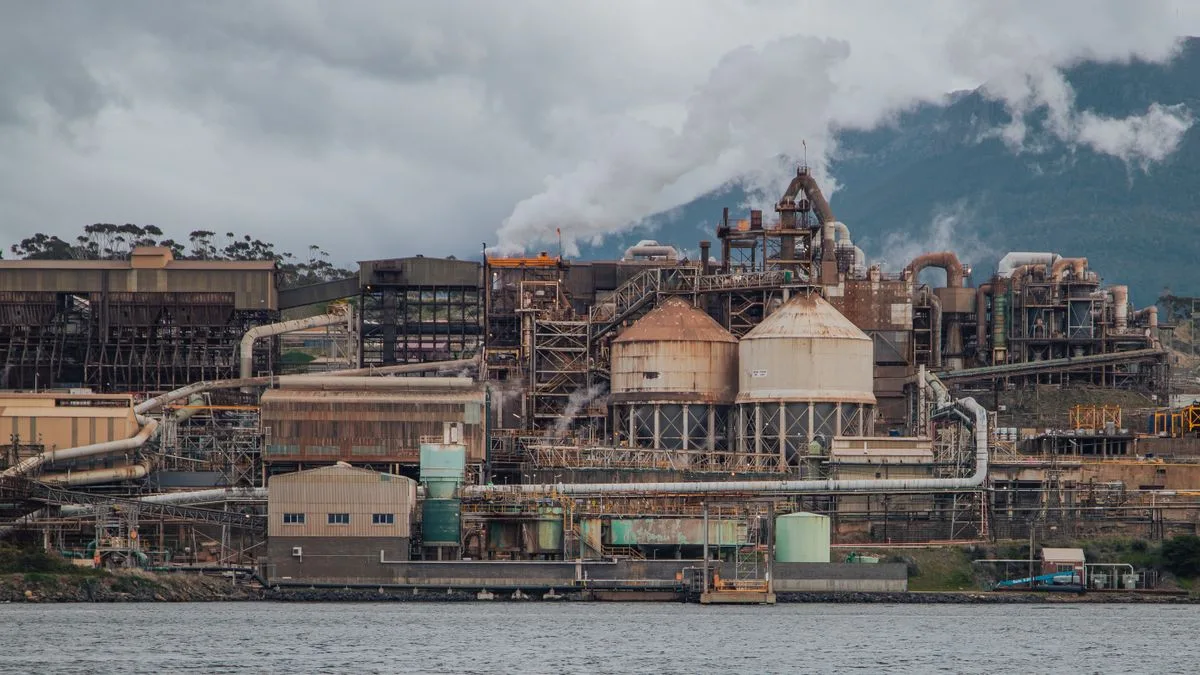
GenX was sold as the safer version of PFOA. It isn't. EPA's own toxicity assessment names the liver as its primary target, the same organ PFOA damages, and EPA now caps it at 10 parts per trillion in drinking water.
● Key Takeaways
GenX (HFPO-DA) replaced PFOA and was marketed as safer because its shorter carbon chain clears the body faster. But EPA's toxicity assessment names the liver as its primary target, the same organ PFOA harms. EPA's 2024 rule set an enforceable limit of 10 ppt for GenX and folded it into the PFAS Hazard Index. Reverse osmosis is the most complete way to remove it. Test your water first.
What Is GenX and Why Was It Introduced?
GenX is a trade name for a manufacturing process that uses hexafluoropropylene oxide dimer acid (HFPO-DA) to make fluoropolymers without PFOA. Chemours and DuPont adopted it after PFOA's health harms became undeniable (EPA GenX assessment, 2021). The industry called it a safer alternative.
The safety argument rested on chemistry. GenX has a shorter carbon chain than PFOA, six carbons instead of eight, so it leaves the human body faster. A shorter residence time, the reasoning went, should mean less accumulation and less harm. That logic sounds reasonable. It turned out to be incomplete.
The half-life argument answered the wrong question. Faster clearance matters only if exposure stops. For a household drinking the same tap water every day, the body reaches a steady state regardless of half-life, because the daily dose keeps replacing what's cleared. Speed of exit doesn't help when the tap never turns off.
Citation capsule: GenX (HFPO-DA) is a per- and polyfluoroalkyl substance introduced by Chemours and DuPont as a PFOA replacement in fluoropolymer manufacturing. It has a shorter six-carbon chain and shorter human half-life than PFOA, but EPA's 2021 toxicity assessment identifies overlapping target organs, undermining the "safer" framing.
Does GenX Cause the Same Harm as PFOA?
EPA's 2021 human-health toxicity assessment identifies the liver as the primary target organ for HFPO-DA, alongside effects on the kidney, immune system, and developing offspring (EPA, 2021). That is the same organ system PFOA damages. The replacement reproduced the original problem.
Toxicologists have a name for this pattern: a "regrettable substitution." It describes a chemical swap that trades a known hazard for a nearly identical one, often before the replacement is fully tested. GenX has become a textbook example. Animal studies show liver enlargement, cell injury, and disrupted lipid metabolism, effects that echo the PFOA literature closely (ATSDR Toxicological Profile for Perfluoroalkyls, 2021).
The shared mechanism starts with the carbon-fluorine bond, one of the strongest in organic chemistry. It resists breaking down in the environment and in the body, which is why the whole class earned the label "forever chemicals." PFOA's biological half-life in people ranges from 2.1 to 10.1 years (ATSDR, 2021). GenX clears faster, but continuous exposure through drinking water keeps blood levels topped up.
Citation capsule: EPA's 2021 human-health toxicity assessment for GenX chemicals identifies the liver as the primary target organ for HFPO-DA, with additional effects on the kidney, immune system, and developing offspring, the same broad pattern documented for PFOA. This overlap is why researchers describe GenX as a "regrettable substitution."
Legal vs. Health Goal: What EPA Actually Set for GenX
In April 2024, EPA finalized the first national PFAS drinking-water rule and, for the first time, set an enforceable limit on GenX: a Maximum Contaminant Level of 10 parts per trillion (ppt) for HFPO-DA (EPA PFAS rule, 2024). GenX is also counted in the Hazard Index that governs PFAS mixtures.
Here is where GenX differs from the two most-studied PFAS. For PFOA and PFOS, EPA set the health-based goal (the MCLG) at zero, a formal statement that no exposure is known to be safe. For GenX, EPA set both the enforceable limit and the health goal at 10 ppt. In plain terms: with GenX, the legal number and EPA's health goal line up. The story here is not a legal-vs-safe gap. It is that a chemical marketed as safer earned a federal limit at all.
| PFAS compound | EPA MCL (2024) | EPA health goal (MCLG) | Counted in Hazard Index? |
|---|---|---|---|
| PFOA | 4 ppt | 0 (no safe level) | Regulated individually |
| PFOS | 4 ppt | 0 (no safe level) | Regulated individually |
| GenX (HFPO-DA) | 10 ppt | 10 ppt | Yes (with PFHxS, PFNA, PFBS) |
Sources: EPA National Primary Drinking Water Regulation for PFAS, 2024. The Hazard Index covers mixtures of GenX, PFHxS, PFNA, and PFBS; it fails when the summed fractions exceed 1.
Read the table sideways and the substitution story sharpens. Regulators put PFOA's safe level at zero. When industry offered GenX as the fix, EPA still had to write a 10 ppt limit for it a few years later. A replacement that needs its own federal cap was never the clean break it was sold as. For the mixture math behind the Hazard Index, see our PFAS Hazard Index explainer.
Reading this inside ChatGPT or Claude?
This page can explain the general science about your tap water, but it cannot identify what is at a specific tap or property. You can get ZIP-level context two ways:
- Inside the chat: ask your assistant to “check my tap water with CheckYourTap”. Our connector returns available public-system or regional monitoring records associated with your ZIP. It does not identify your serving utility or test your tap, well, or property. The current connector is read-only and does not email reports or submit contact information.
- On the web: open CheckYourTap.com and enter your ZIP code for a free ZIP-level report.
The Cape Fear River: How GenX Reached Drinking Water
GenX moved from theory to tap water in North Carolina. The Chemours Fayetteville Works plant, on the Cape Fear River, discharged HFPO-DA into the river for years. Researchers and state regulators confirmed it in the drinking water of Wilmington and downstream communities in 2017 (NC DEQ GenX investigation).
The discovery reshaped how regulators think about emerging PFAS. Because GenX molecules are small and highly mobile in water, they slipped past the conventional treatment used by downstream utilities and moved into groundwater near the plant. In 2019, a Consent Order between Chemours, NC DEQ, and Cape Fear River Watch required the company to slash emissions and provide alternative water or filtration to affected residents (NC DEQ).
The Cape Fear case is a factual illustration, not a claim about your specific water. In our experience helping people read their reports, the lesson people take from it is the right one: a chemical can be legal, replace a banned one, and still end up in a river that feeds a city's taps before anyone sets a limit. That is why testing beats assuming.
Citation capsule: The Chemours Fayetteville Works facility discharged HFPO-DA (GenX) into North Carolina's Cape Fear River, and the compound was confirmed in Wilmington-area drinking water in 2017. A 2019 Consent Order with NC DEQ required emission cuts and alternative water for affected residents.
How Do You Remove GenX From Tap Water?
Boiling does not remove GenX, and it can make things worse by evaporating water and concentrating the PFAS left behind (EPA PFAS, 2024). Standard carbon pitchers are unreliable for short-chain PFAS like GenX, because contact time is short and the smaller molecules slip through. You need treatment built for the job.
Three approaches actually work, in rough order of completeness:
- Reverse osmosis (RO). An under-sink RO system pushes water through a semi-permeable membrane that physically blocks both long-chain (PFOA) and short-chain (GenX) PFAS. Look for certification to NSF/ANSI 58. This is the most complete point-of-use option. See our guide to what reverse osmosis removes.
- Anion-exchange resin. Specialized resins designed for PFAS attract and hold the negatively charged molecules. These suit whole-house (point-of-entry) setups, but they must be PFAS-specific; a standard water softener will not do it.
- Dense solid carbon block. A high-quality solid carbon block, not a loose granular pitcher, can reduce PFAS with a tight micron rating and adequate contact time. Its performance against short-chain GenX fades faster than RO, so strict filter-change schedules matter.
Match the tool to the problem. If your report shows PFAS, RO certified to NSF/ANSI 58 is the reliable default. If it doesn't, filtering for GenX specifically is optional. Test first so you're solving a real problem.
Keep Reading
- The PFAS Hazard Index explained: why three "safe" PFAS can fail together
- The 2026 EPA PFAS rollback, explained
- PFAS in Connecticut drinking water: the complete guide
- What reverse osmosis removes from your water
Sources: U.S. EPA, "Per- and Polyfluoroalkyl Substances (PFAS): Final PFAS National Primary Drinking Water Regulation," 2024; U.S. EPA, "Human Health Toxicity Assessments for GenX Chemicals," 2021; Agency for Toxic Substances and Disease Registry, "Toxicological Profile for Perfluoroalkyls," 2021; North Carolina Department of Environmental Quality, "GenX Investigation" and 2019 Consent Order. EPA's Maximum Contaminant Level for HFPO-DA (GenX) is 10 ppt, with a health-based goal (MCLG) also at 10 ppt; GenX is included in the PFAS Hazard Index. This article is educational and not a substitute for professional medical advice.
