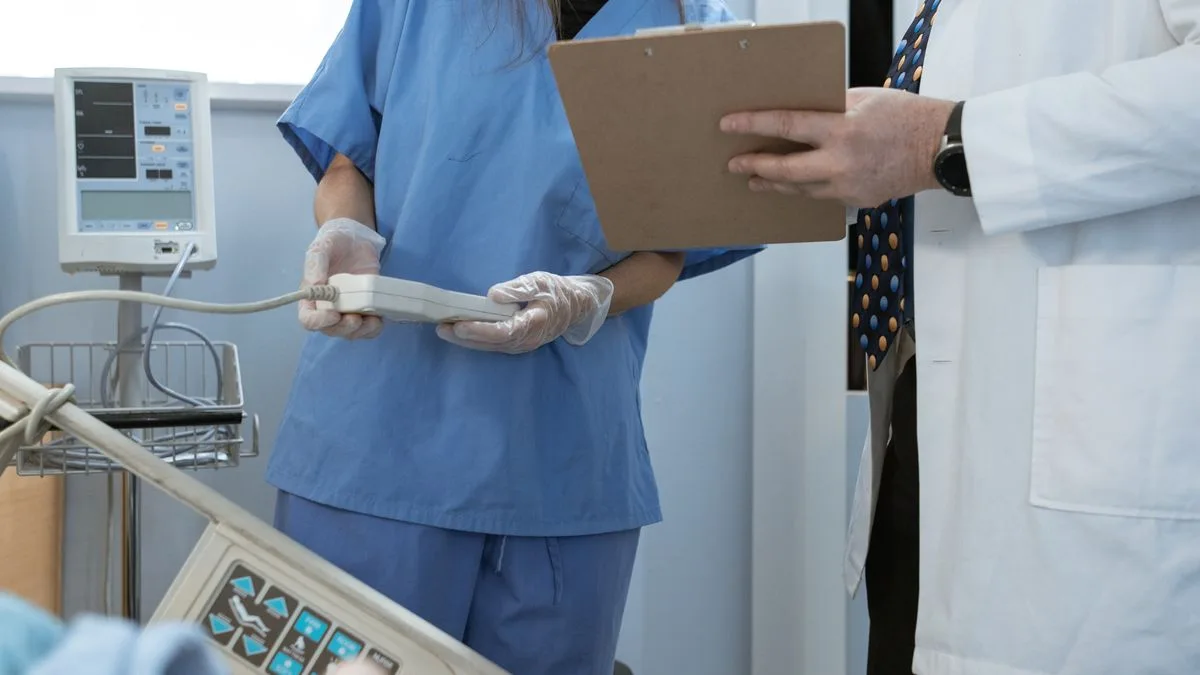
Chloramine is safe to drink but must be removed from dialysis water. Your gut neutralizes it before it reaches your blood; hemodialysis skips the gut entirely, so chloramine can oxidize red blood cells directly and cause hemolytic anemia.
● Key Takeaways
Chloramine at the EPA drinking limit of 4 mg/L is safe to swallow because your gut breaks it down. Hemodialysis removes that defense: dialysis water contacts blood directly across a thin membrane, so chloramine can oxidize red blood cells and cause acute hemolytic anemia. That is why the AAMI dialysis standard caps total chlorine at 0.1 mg/L, about 40x stricter than the drinking-water limit. Centers remove it with catalytic carbon plus reverse osmosis. This is a medical-water issue, not a reason healthy people should fear their tap.
Why Is Chloramine Safe to Drink but Dangerous in Dialysis?
Chloramine serves more than 1 in 5 Americans as a drinking-water disinfectant, and at the tap it is safe to swallow (CDC, 2024). The danger appears only when water bypasses digestion. Hemodialysis does exactly that, contacting blood directly across a membrane and skipping the gut that would otherwise neutralize the compound.
The difference comes down to the exposure route. When you drink chloraminated water, stomach acid and digestive enzymes dismantle the chlorine-ammonia bond before it can reach your bloodstream. It never gets near your red blood cells intact. This is why the EPA sets its maximum residual disinfectant level at 4 mg/L for oral consumption and considers that protective for the general public.
Hemodialysis is a different exposure entirely. The machine mixes purified water with concentrate to make dialysate, the cleaning fluid, then runs it past your blood across a thin filter membrane. Small molecules like chloramine slip through that membrane easily. There's no stomach in the loop, so nothing neutralizes the chemical first.
Volume makes it worse. A healthy adult drinks roughly 10 to 14 liters of water a week. A hemodialysis patient's blood meets roughly 300 to 600 liters of water a week through dialysate (CDC, water use in dialysis). At that scale, even a trace of chloramine adds up to a real chemical dose delivered straight to the blood.
Citation capsule: Chloramine serves more than 1 in 5 Americans and is safe to drink at the EPA's 4 mg/L limit because digestion neutralizes it (CDC, 2024). Hemodialysis exposes blood to roughly 300 to 600 liters of water weekly across a membrane, bypassing the gut entirely (CDC).
What Does the Dialysis Water Standard Actually Require?
The gap between a safe drink and safe dialysis water is large and deliberate. The AAMI water-for-dialysis standard caps total chlorine, which includes chloramine, at 0.1 mg/L, roughly 40 times stricter than the EPA's 4 mg/L drinking limit (ANSI/AAMI 13959, 2014). The functional goal is as close to zero as the treatment train can reach.
This is not a "legal versus safe" scandal, and it is important to say so plainly. The two numbers protect two completely different exposures. The 4 mg/L drinking limit assumes you swallow the water and your gut disarms the chloramine. The 0.1 mg/L dialysis limit assumes the water touches your blood directly. Comparing them as if one exposes a loophole in the other misreads the biology.
| Standard | Total chlorine / chloramine limit | Exposure route it protects |
|---|---|---|
| EPA MRDL (drinking water) | 4.0 mg/L | Oral, neutralized by digestion |
| AAMI dialysis water (ANSI/AAMI 13959) | 0.1 mg/L (target near zero) | Direct blood contact across dialyzer |
| Ratio | ~40x stricter for dialysis | Different exposure, not a safety gap |
The stricter dialysis number reflects a real, documented hazard rather than an abundance of caution. Before modern water-treatment standards, chloramine contamination of dialysate caused clusters of hemolytic anemia in dialysis units, including a well-documented outbreak in which patients fell ill after a treatment plant's chloramine reached the dialysis water (Tipple et al., Infect Control Hosp Epidemiol, 1991).
How Does Chloramine Actually Destroy Red Blood Cells?
Chloramine wrecks red blood cells by rusting them, in effect. The damage is chemical, not an allergy. Once it crosses the filter membrane, chloramine attacks the sulfur-containing parts of hemoglobin, the protein that carries oxygen, and the cell's outer wall, warping the protein and bursting the cell (Tipple et al., 1991). The wrecked clumps left behind are called Heinz bodies.
Here's the sequence. Chloramine is a strong oxidizer, meaning it strips electrons from whatever it touches. When it reaches hemoglobin, it pulls electrons from the protein's sulfur groups. The damaged hemoglobin clumps into Heinz bodies that stick to the inside of the cell wall. The wall gives way, and the red blood cell bursts. Multiply that across billions of cells and the blood's ability to carry oxygen drops fast.
The symptoms follow the biology. Chloramine-driven cell destruction in dialysis has caused shortness of breath, fatigue, chest pain, and darkened blood in the tubing. In severe historical cases, it contributed to cardiovascular collapse. That's why total chlorine gets tested before treatment, not after.
One physical property makes chloramine especially stubborn here. Unlike free chlorine, chloramine is stable and does not off-gas from standing water. You cannot make dialysis water safe by letting it sit, which is the same reason chloramine is deadly to aquarium fish that also contact water directly through their gills. Stability is exactly what makes chloramine a good pipe disinfectant and a hard one to remove.
Reading this inside ChatGPT or Claude?
This page can explain the general science about your tap water, but it cannot identify what is at a specific tap or property. You can get ZIP-level context two ways:
- Inside the chat: ask your assistant to “check my tap water with CheckYourTap”. Our connector returns available public-system or regional monitoring records associated with your ZIP. It does not identify your serving utility or test your tap, well, or property. The current connector is read-only and does not email reports or submit contact information.
- On the web: open CheckYourTap.com and enter your ZIP code for a free ZIP-level report.
Why Home Hemodialysis Raises the Stakes
Home hemodialysis moves water safety from a monitored clinic to a patient's kitchen, and that shift is where chloramine risk grows. Commercial units run multi-stage purification watched by technicians; home patients make dialysate from residential tap water, so a change at the utility can reach them without warning. Municipal chloramine can also fluctuate with distance from the plant and season.
Utilities sometimes switch from free chlorine to chloramine, or boost dosing, to control disinfection byproducts or summer bacterial growth. A home dialysis patient may test clean one week and see a chloramine spike the next. Standard carbon blocks that handle free chlorine can let chloramine break through, because the chlorine-ammonia bond needs far more contact time to break.
In our water-report work, the single most common surprise for households is not the presence of a contaminant but a disinfectant switch they never heard about. Utilities disclose the change in the annual Consumer Confidence Report, but few residents read it. For a home dialysis patient, that unread notice is the difference between routine treatment and a medical emergency.
Citation capsule: The AAMI water-for-dialysis standard caps total chlorine at 0.1 mg/L, about 40 times stricter than the EPA's 4 mg/L drinking limit, because dialysis water contacts blood directly (ANSI/AAMI 13959, 2014). Chloramine oxidizes hemoglobin's sulfhydryl groups, forming Heinz bodies and rupturing red cells (Tipple et al., 1991).
How Do Dialysis Centers Remove Chloramine?
Removing chloramine for dialysis takes purpose-built filtration, not a household pitcher. The AAMI-aligned approach pairs catalytic carbon with reverse osmosis, and it is designed with a fail-safe, because a single filter breakthrough could reach a patient (ANSI/AAMI 13959, 2014). Softeners, sediment filters, and standard carbon are not sufficient on their own.
The treatment train works in a specific order:
- Catalytic carbon first. Catalytic carbon has a treated surface that speeds up the reaction breaking the chlorine-ammonia bond. Dialysis systems usually run two carbon tanks back to back, so the water spends long enough in contact with the carbon. If the first tank fills up, the second catches what slips past before it reaches the patient.
- Reverse osmosis second. After carbon neutralizes the chloramine, reverse osmosis removes the released ammonia along with dissolved solids and metals. RO cannot remove chloramine on its own, and chloramine can even degrade RO membranes, so carbon has to come first.
- Test before every treatment. Water is checked for total chlorine before each session, sampled between the two carbon tanks so any breakthrough is caught before it advances. Testing catches problems the plumbing cannot.
What This Looks Like in Connecticut
This one is about treated public water, so the honest answer is different from most of our Connecticut coverage. The contaminant in this article is a product of disinfection or of the treatment plant itself. It is not something that turns up in a private well, so testing a well would tell you nothing about it.
What you can do instead is read your utility's annual Consumer Confidence Report, which is required to list what was actually detected in the water delivered to your tap. That is the document with your answer in it, and it is free.
If you or a family member is moving to home hemodialysis, treat the water system as part of the medical setup. Coordinate with your nephrology team and a certified water-treatment specialist, and never assume tap water that tastes fine and meets EPA drinking standards is safe for direct blood contact.
Keep Reading
- Why chloramine, not just chlorine, kills aquarium fish: the same direct-contact mechanism, in gills
- Chloramine vs. chlorine in pregnancy: what actually matters: the byproduct question for a different vulnerable group
- What reverse osmosis actually removes: the second stage of dialysis-grade treatment
Sources: U.S. EPA National Primary Drinking Water Regulations, maximum residual disinfectant level for chloramine (4 mg/L); Centers for Disease Control and Prevention, "Water Disinfection with Chlorine and Chloramine"; ANSI/AAMI 13959, "Water for hemodialysis and related therapies" (total chlorine limit 0.1 mg/L); Ward RA, "Water preparation for hemodialysis," Journal of the American Society of Nephrology, 2000; Tipple MA et al., "Illness in hemodialysis patients after exposure to chloramine contaminated dialysate," Infection Control & Hospital Epidemiology, 1991. This article describes dialysis-center and home-dialysis water treatment. It is not medical advice; consult your nephrology team.
