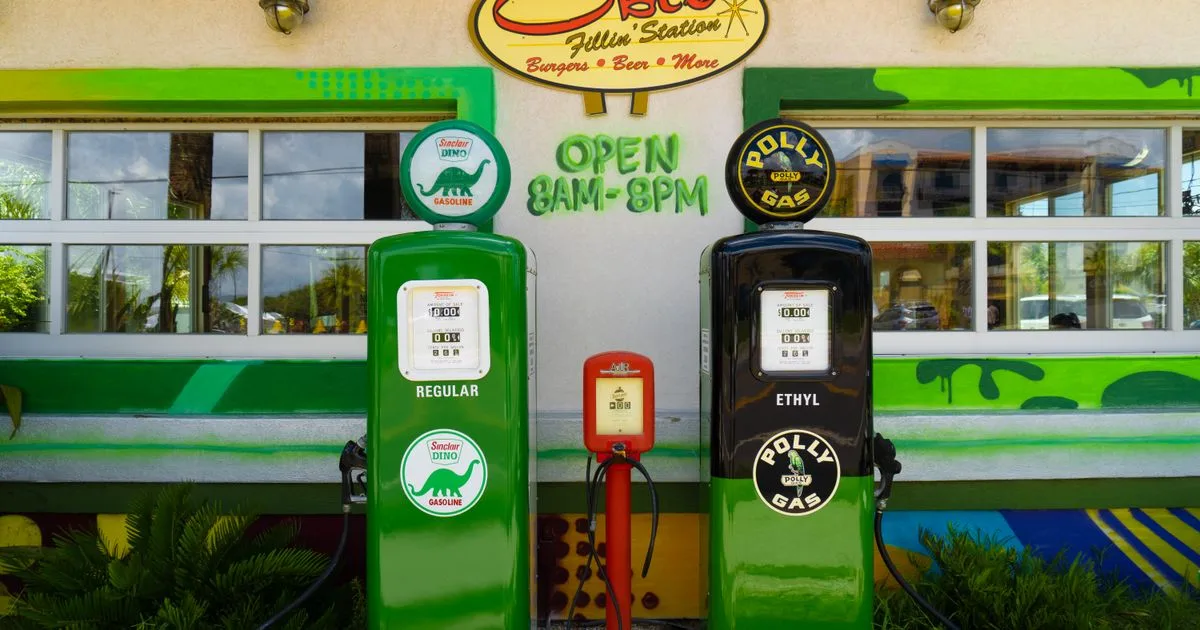
Fuel is Connecticut's biggest spill category, and leaking underground tanks are a real source of groundwater contamination. Both true. But the way most people read those facts, "most fuel spills = worst water," the data does not support.
● Key Takeaways
Fuel (gasoline, diesel, home heating oil) is Connecticut's largest spill category (~37%), and ~4,500 confirmed leaking underground tanks since 1975 are a genuine groundwater source. Two caveats change everything: (1) fuel-spill counts don't predict the fuel chemicals measured in a town's groundwater (rho ≈ 0.13, not significant); (2) even confirmed leaking tanks aren't a chemically clean signal: in the data they co-occur with solvents about as strongly as with their own fuel chemicals, because tanks and dry cleaners share the same industrial districts. A leaking tank near a private well is a reason to test for benzene/MTBE, but "most fuel spills" is not a map of the worst water.
The Real Part: Fuel and Leaking Tanks Matter
Let's start with what's true, because it is. Fuel is the largest single spill category in Connecticut. Home heating oil (#2 fuel oil) is the most-reported substance in the entire spill record, followed by gasoline and diesel. And underground storage tanks do fail: Connecticut has roughly 4,500 confirmed leaking underground storage tank (LUST) cases on record, some dating to 1975.
When a tank leaks gasoline or fuel oil, the chemicals of concern are the mobile, soluble ones: benzene (a known carcinogen) and MTBE (a former gasoline additive that moves easily through groundwater). These can migrate to nearby wells, which is exactly why a documented leaking tank near a private well is worth taking seriously. The federal and state programs that track and remediate these sites exist for good reason (U.S. EPA, Underground Storage Tanks).
So the risk is real and the cleanup programs exist for a reason. Now the two caveats that keep it in perspective.
Caveat One: Fuel-Spill Counts Don't Predict Fuel in Water
The intuitive move is to rank towns by fuel-spill count and treat the top of the list as the worst water. We tested that directly, and it fails. Comparing each Connecticut ZIP's petroleum-spill count against the benzene and MTBE actually detected in its groundwater, the association was weak and not statistically significant (Spearman rho ≈ 0.13, p ≈ 0.24).
Why? Because a fuel-spill count mostly measures traffic, population, and the density of tanks and gas stations, not contamination. Most fuel spills are small surface releases that are cleaned up and never reach groundwater. We walk through this reporting-versus-reality gap in detail in "the most spills does not mean the worst water."
Caveat Two: Even Confirmed Leaks Aren't a Clean Signal
Confirmed leaking tanks are a better signal than raw spill counts, and here the data does show something. In Connecticut groundwater, ZIPs with more LUST sites do have somewhat more fuel-chemical detection (a modest, real association). But there's a catch: those same ZIPs show chlorinated solvents (PCE/TCE) about as strongly, or more.
That's not a paradox. It's geography. Leaking tanks and dry cleaners both cluster in the same older industrial and commercial districts, so their groundwater signals overlap and can't be cleanly separated at the ZIP level. Contrast that with dry cleaners, whose association is strongest for solvents specifically, a chemically coherent signal. The petroleum signal is real but tangled with general industrial land use, so we don't claim "leaking tanks put benzene in your well" as a specific, isolated finding.
The Rankings, and How to Read Them
For completeness, here's where the confirmed leaking tanks are, with the caption that belongs on every such list.
| Top towns | What it reflects | |
|---|---|---|
| By raw count | Hartford, Stamford, Bridgeport, Waterbury, Danbury | The largest, most industrial cities: most tanks, longest histories |
| Per 10,000 residents | North Canaan, Sharon, Litchfield, Andover, Thomaston | Small towns where a few legacy cases loom large against a tiny population |
This ranks documented tank cases (industrial history and tank density), not drinking-water quality. In the Connecticut data, these counts do not predict what's in local wells. Read the list as a map of where tanks and industry are, and then ask the only question that matters for your tap: is there a documented leak near my well, and have I tested for fuel chemicals?
Reading this inside ChatGPT or Claude?
This page can explain the general science about leaking tanks and fuel chemicals near a Connecticut address, but it cannot identify what is at a specific tap or property. You can get ZIP-level context two ways:
- Inside the chat: ask your assistant to “check my tap water with CheckYourTap”. Our connector returns available public-system or regional monitoring records associated with your ZIP. It does not identify your serving utility or test your tap, well, or property. The current connector is read-only and does not email reports or submit contact information.
- On the web: open CheckYourTap.com and enter your ZIP code for a free ZIP-level report.
What To Actually Do
If you're on public water, your utility monitors for benzene and other fuel VOCs under federal rules, so a nearby tank is not your problem to chase. If you're on a private well and there's a documented leaking tank nearby, add benzene and MTBE to your test. That's the action item: not fear of the spill map, but a specific test where a specific source warrants it.
Keep Reading
- Why "the most spills in town" does NOT mean "the worst water"
- Do Connecticut spills actually show up in well water? We analyzed it.
- Connecticut doesn't test your private well. Here are the two reasons you should
Sources: Connecticut Department of Energy and Environmental Protection (CT DEEP) leaking-underground-storage-tank and spill records; U.S. EPA, Underground Storage Tanks; ATSDR, Benzene ToxFAQs; Connecticut groundwater VOC monitoring, 1982 to 2017 (analyzed by CheckYourTap). Associations are Spearman rank correlations across Connecticut ZIP codes; rankings are documented case counts, not measurements of drinking-water quality.
