For most people on public water, a nearby spill is not a drinking-water concern. The utility treats the water and tests both its source and what comes out of your tap. Two narrow exceptions are real. One thing people fear isn't a tap-water pathway at all.
● Key Takeaways
Public water is treated and monitored (source and delivered water both tested), so for the large majority a nearby spill isn't a tap-water concern. Two narrow, real exceptions live in the pipes: permeation (dissolved petroleum/solvent chemicals passing through certain plastic service lines from heavily contaminated soil) and backflow during a main break or pressure loss. Both are uncommon, regulated against, and detectable. And the thing people most often conflate is not a drinking-water pathway: vapor intrusion is soil gas entering indoor air, not your tap water. City seepage is a low-probability, specific-conditions event, which is exactly why the private-well story is the one that actually matters.
Start With the Reassurance, Because It's True
Public water systems in Connecticut and nationwide operate under the Safe Drinking Water Act. That means a utility treats the water and tests it (both the source water it draws and the finished water it sends into the distribution system) on a mandated schedule, and reports the results to you every year (U.S. EPA, drinking water regulations). So when a spill happens a few blocks away, the honest answer for the vast majority of customers is: your tap water is not at risk, and the system is built and monitored specifically to keep it that way.
That's the frame to hold onto. The exceptions below are real, but they are exceptions: narrow, conditions-specific, and regulated against, not the rule.
Exception One: Permeation of Plastic Pipe
The first real pathway is permeation. Some water service lines are made of plastic (polyethylene or polybutylene), and these nonpolar plastics can, under specific conditions, allow nonpolar organic chemicals to diffuse through the pipe wall. If the soil immediately surrounding a plastic service line is grossly contaminated with petroleum or solvents, chemicals like benzene can permeate the pipe and enter the water inside it.
This is documented, not hypothetical. The EPA describes cases where a gasoline release next to a plastic service line led to BTEX (benzene, toluene, ethylbenzene, xylene) in the water inside it (EPA, Permeation & Leaching). But note the conditions it requires: a high-concentration plume directly against a plastic pipe. It does not affect ductile-iron or copper mains, and it's precisely why plumbing codes restrict plastic service-line materials in hydrocarbon-contaminated soil. It's a narrow, material-and-location-specific mechanism, a reason for engineering standards, not a reason to distrust treated water in general.
Exception Two: Backflow and Cross-Connections
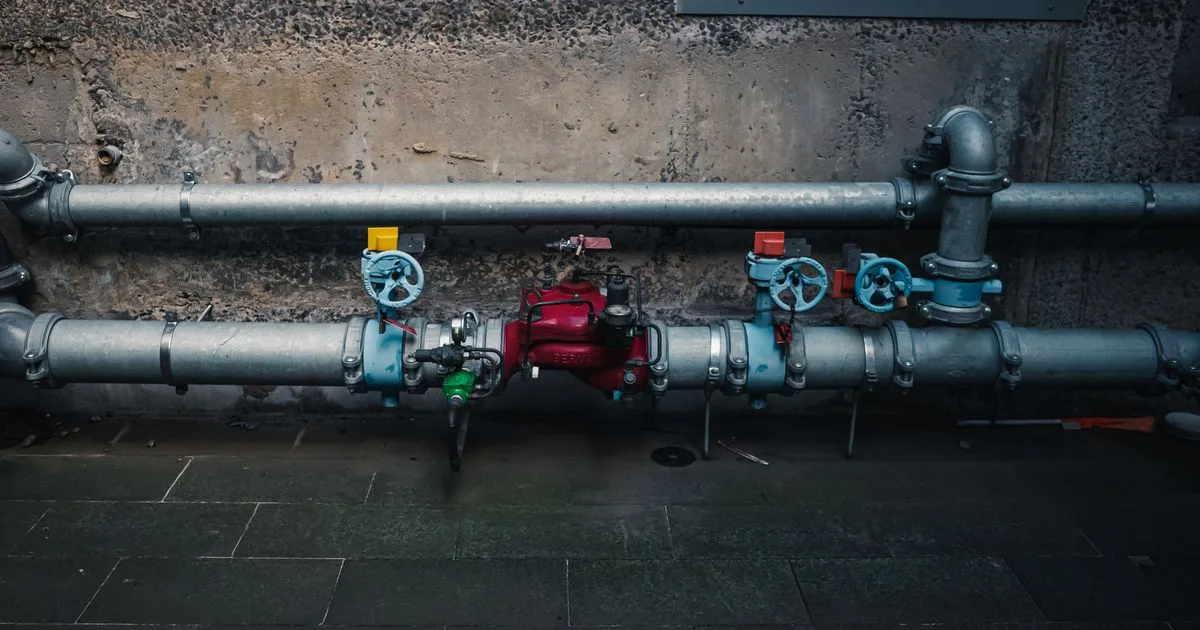
The second pathway is backflow. Water in a distribution system is normally kept under positive pressure, which pushes water out toward your tap. During a main break, hydrant use, or a sudden pressure loss, that pressure can briefly drop or reverse. And if there's an unprotected cross-connection somewhere on the system, contamination can be drawn backward into the pipes.
This is exactly why utilities require backflow preventers and run cross-connection control programs. It's a known, engineered-against risk, and when a pressure event occurs, utilities issue boil-water or do-not-use notices while they test and flush. Again: real, uncommon, and actively managed.
The Thing That Is NOT a Tap-Water Pathway: Vapor Intrusion
Here's the confusion worth clearing up, because it causes more unnecessary fear than either real pathway. Near contamination sites, you'll often read about vapor intrusion. Vapor intrusion is when chemical vapors in soil gas migrate upward into the indoor air of a building: a basement, a crawlspace, a ground floor.
Vapor intrusion is an indoor-air pathway. It is not a drinking-water pathway. If a site near you is being investigated for vapor intrusion, that's a question about the air inside nearby buildings, not about what comes out of your kitchen faucet. The two get conflated constantly, and treating an air-quality issue as a tap-water issue leads people to fear the wrong thing. Keep them separate.
The Three Pathways at a Glance
| Pathway | Mechanism | What it requires | Reaches your tap water? |
|---|---|---|---|
| Permeation | Organic chemicals diffuse through the pipe wall | A high-concentration plume against a plastic (PE/PB) service line | Yes, but rare and material-specific |
| Backflow | Pressure loss pulls contamination backward into pipes | A main break/pressure event + an unprotected cross-connection | Yes, but uncommon and engineered-against |
| Vapor intrusion | Soil-gas vapors rise into indoor air | A subsurface plume beneath/near a building | No. This is indoor air, not drinking water |
Why This Points Back to Private Wells
Put the pieces together and the logic is clear. On public water, the system treats and monitors your supply, and the ways a spill could reach your tap are narrow, engineered-against, and detectable. On a private well, none of that applies. The water is untreated, unmonitored, and drawn directly from the same groundwater a source might reach. That's the asymmetry that matters: seepage into city water is a low-probability, specific-conditions event, while a private well near a documented source is the situation actually worth acting on.
Reading this inside ChatGPT or Claude?
This page can explain the general science about whether a nearby spill affects city or well water at an address, but it cannot identify what is at a specific tap or property. You can get ZIP-level context two ways:
- Inside the chat: ask your assistant to “check my tap water with CheckYourTap”. Our connector returns available public-system or regional monitoring records associated with your ZIP. It does not identify your serving utility or test your tap, well, or property. The current connector is read-only and does not email reports or submit contact information.
- On the web: open CheckYourTap.com and enter your ZIP code for a free ZIP-level report.
What To Actually Do
If you're on public water, read your utility's annual Consumer Confidence Report (it lists what was detected in the water delivered to you) and call the utility if you have a specific concern about your area; they monitor the distribution system and can speak to it directly. If you're on a private well, the pathway that's genuinely yours to manage is proximity to a documented source, because no one tests your well for you.
Keep Reading
- Do Connecticut spills actually show up in well water? We analyzed it.
- Connecticut doesn't test your private well: here are the two reasons you should
- How to read your Connecticut water report
Sources: U.S. EPA, Permeation & Leaching in Distribution Systems and National Primary Drinking Water Regulations; U.S. EPA, Drinking Water Distribution System Tools and Resources. Permeation and backflow are documented but conditions-specific pathways; vapor intrusion is an indoor-air pathway, not a drinking-water pathway.
