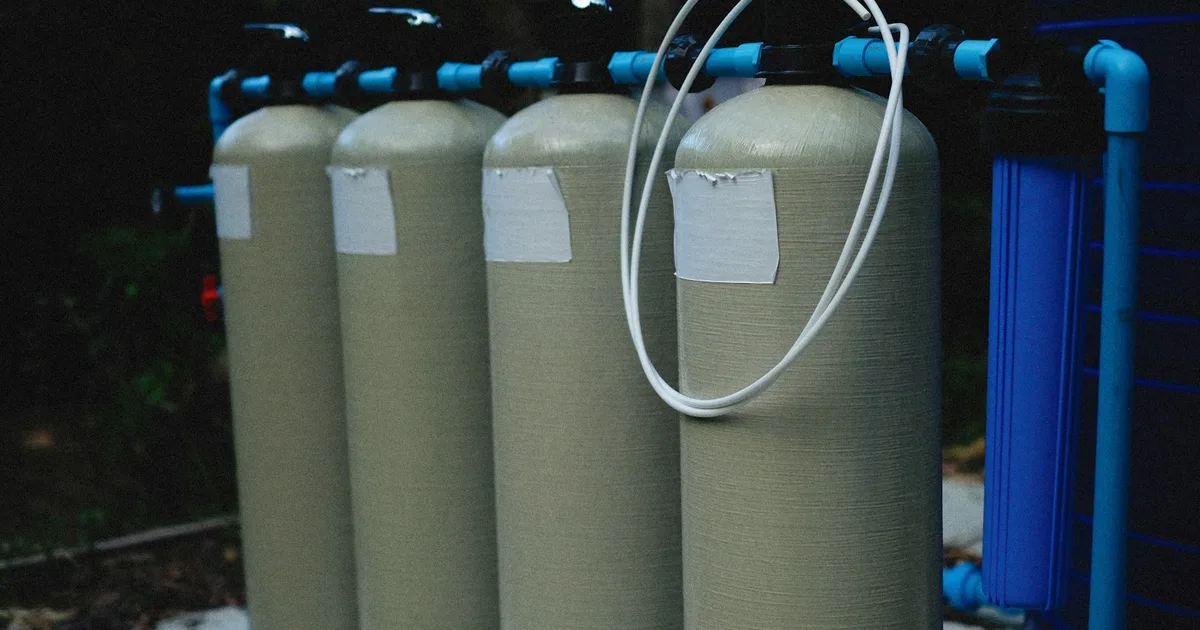
Reverse osmosis is the most complete home fix for PFAS. A quality RO system rejects over 99% of these forever chemicals, reaching below EPA's 4 ppt limit for PFOA and PFOS. The spec that proves it is not "RO" on the box. It is NSF/ANSI 58 certification with a listed PFOA and PFOS reduction claim.
● Key Takeaways
Reverse osmosis rejects over 99% of PFAS and can reach below EPA's 4 ppt limit for PFOA and PFOS. The certification that proves it is NSF/ANSI 58 with an explicit PFOA/PFOS reduction claim, the standard that absorbed the older NSF P473 protocol. That mark means the claim was tested, not just advertised. Carbon pitchers are inconsistent on short-chain PFAS, so match the filter to the result. Test your water first to confirm which PFAS you actually have.
Why Is Reverse Osmosis the Right Filter for PFAS?
Reverse osmosis is the most reliable home treatment for PFAS because it adds a physical barrier instead of relying on adsorption alone. In a Duke and NC State study, under-sink RO systems removed 94% or more of the PFAS tested, while activated carbon filters were far more inconsistent (Herkert et al., 2020, Environmental Science & Technology Letters).
The difference comes down to size. An RO membrane forces water through pores near 0.0001 microns, and PFAS molecules are much larger than water, so they get rejected and flushed to the drain. Carbon works well on long-chain PFAS like PFOA that stick to its surface. Short-chain PFAS are smaller and more water-soluble, so they pass through carbon more easily and can break through as the media loads up. For the full picture of what an RO membrane does and does not catch, see our guide to what reverse osmosis actually removes.
Which Certification Proves an RO System Removes PFAS?
The certification that matters is NSF/ANSI 58 with an explicit PFOA and PFOS reduction claim. Standard 58 covers the reverse osmosis membrane; NSF/ANSI 53 covers the carbon pre-filters. The PFAS reduction claim is what verifies the system was actually tested against these compounds, not just built with a membrane that theoretically could remove them (NSF, PFOA/PFOS filtration).
Here is the catch most buyer's guides miss. The PFAS reduction claim in NSF/ANSI 53 and 58 grew out of NSF P473, a 2016 protocol written when EPA's health advisory for PFOA plus PFOS was 70 parts per trillion. The certified reduction endpoint was tied to that older 70 ppt number. EPA's 2024 enforceable limit is 4 ppt, roughly seventeen times stricter. So the certification mark proves the technology reduces PFOA and PFOS, but the protocol's validation endpoint and today's health limit have drifted apart. The good news is that RO membranes overshoot the old endpoint by a wide margin, which is why a working RO system still lands well below 4 ppt.
When we help households read a filter box, the single most common mistake is treating the word "RO" as proof. We have seen systems that use a membrane but carry no listed PFAS reduction claim at all. The fix is simple: look up the exact model on the certifier's public listing and confirm "PFOA/PFOS reduction" appears, rather than trusting marketing copy.
What Does EPA's 4 ppt Limit Mean for Your Filter?
EPA's April 2024 rule set the first enforceable federal limits for six PFAS, anchored by a 4 ppt maximum contaminant level for PFOA and PFOS (EPA, 2024). The number that reframes everything, though, is the health goal beneath it: for PFOA and PFOS, EPA set the goal at zero. There is no level the agency considers free of risk.
| PFAS compound | EPA legal limit (MCL, 2024) | EPA health goal (MCLG) |
|---|---|---|
| PFOA | 4 ppt | 0 (no safe level) |
| PFOS | 4 ppt | 0 (no safe level) |
| GenX (HFPO-DA) | 10 ppt | 10 ppt |
| PFHxS | 10 ppt | 10 ppt |
| PFNA | 10 ppt | 10 ppt |
| Mixtures (GenX, PFHxS, PFNA, PFBS) | Hazard Index 1.0 | Hazard Index 1.0 |
Two things in that table drive the filter decision. First, because the health goal for PFOA and PFOS is zero, you are not aiming for "under 4 ppt." You are aiming for non-detect, and RO is the home technology that gets closest. Second, the 4 ppt limit is a utility compliance target, not a promise about your tap on a given day. Levels vary, and a point-of-use system is what protects the water you actually drink. For more on that legal versus safe gap at the faucet, see point-of-use filters: legal versus safe.
Reading this inside ChatGPT or Claude?
This page can explain the general science about your tap water, but it cannot identify what is at a specific tap or property. You can get ZIP-level context two ways:
- Inside the chat: ask your assistant to “check my tap water with CheckYourTap”. Our connector returns available public-system or regional monitoring records associated with your ZIP. It does not identify your serving utility or test your tap, well, or property. The current connector is read-only and does not email reports or submit contact information.
- On the web: open CheckYourTap.com and enter your ZIP code for a free ZIP-level report.
How Do You Choose and Maintain an RO System for PFAS?
Match the system to a confirmed PFAS result, then verify the certification before you buy. A membrane rated below 0.0001 microns will reject well over 99% of PFAS, but only a listed NSF/ANSI 58 PFOA/PFOS reduction claim proves that specific model was tested (NSF). Everything below assumes you already know PFAS is present in your water.
Look for three things on the certifier's public listing, not the packaging:
- NSF/ANSI 58 with a PFOA/PFOS reduction claim. This is the membrane standard plus the tested PFAS claim. NSF/ANSI 53 on the pre-filters is a useful add, since good carbon protects the membrane from chlorine and catches long-chain PFAS first.
- A multi-stage design. Catalytic carbon pre-filters handle long-chain PFAS and chlorine; the high-rejection membrane handles short-chain compounds that carbon lets slip.
- A maintenance schedule you will keep. Replace carbon pre-filters on the manufacturer's cycle so chlorine cannot degrade the membrane, and replace the membrane on schedule. A neglected RO system slowly loses the rejection rate that made it worth buying.
Two honest cautions. Do not boil water to remove PFAS; boiling evaporates water and concentrates the chemicals left behind. And do not lean on a basic carbon pitcher for short-chain PFAS. If you want the pitcher-specific version of that question, we cover it in do Brita filters remove PFAS.
What This Looks Like in Connecticut
Connecticut is not hypothetical on PFAS. In the EPA's most recent national monitoring round, 35 Connecticut public water systems had a PFOA or PFOS result above 4 ng/L, the level the EPA set as its limit in 2024. The highest single reading in the state was 16.2 ng/L of PFOS, at Norwich Public Utilities.
Two things change what that number means. First, one sample above 4 ng/L is usually not a violation: the EPA judges compliance on a running annual average, not on a single reading.
Second, and this is the part worth sitting with. The national monitoring program does not report any PFOA or PFOS result below 4 ng/L. That is a reporting floor, not a limit of what labs can detect, and the EPA set it back in 2021, before these limits existed. It happens to land on the same number as the limit. The effect is that every Connecticut result in this dataset is either "not reported" or "at or above the limit", with nothing in between.
Which leads somewhere uncomfortable. The EPA's own health goal for PFOA and PFOS is zero: no amount of either is considered safe. But nothing gets reported until it reaches 4 ng/L. So a system that comes back "not detected" has not been shown to be free of PFAS. It has been shown to sit below a floor that is far above the health goal. Read this as a map of where PFAS turns up, not as a ranking of whose water is worst.
And this is public-water data. Private wells are not in this monitoring round at all, so if you are on a well, nobody has tested it for you and our records cannot tell you what is in it.
Source: EPA UCMR5 public-water monitoring for Connecticut (samples collected January 2023 to December 2025), analyzed by CheckYourTap.
Reverse osmosis earns its cost when PFAS is confirmed and the certification checks out. It is overkill for water that tests clean. The order that saves money is always the same: test, confirm which contaminants are elevated, then buy the filter that is certified to remove them.
Keep Reading
- What reverse osmosis actually removes
- Point-of-use filters: legal versus safe
- Do Brita filters remove PFAS?
Sources: U.S. EPA, PFAS National Primary Drinking Water Regulation (2024) and PFAS maximum contaminant levels; NSF International, PFOA/PFOS drinking water filtration and NSF/ANSI 53, 58, and P473; Herkert NJ et al., "Assessing the Effectiveness of Point-of-Use Residential Drinking Water Filters for Perfluoroalkyl Substances," Environmental Science & Technology Letters, 2020. EPA health goals (MCLG) of zero for PFOA and PFOS indicate no level considered free of risk; test results vary by system and address. Confirm any product's PFAS reduction claim on the certifier's public listing.
